 English
 русский
 Español
 عربى
عربىIndustry News
Home / News / Industry News / The Cold Standard: Maximizing Efficiency and Longevity in Modern Commercial Refrigeration
2026-01-12
Content
Selecting a commercial refrigerator requires a deep understanding of your kitchen’s workflow and volume. Unlike residential units, commercial systems are engineered to maintain consistent internal temperatures despite frequent door openings and high ambient kitchen heat. Reach-in units are the industry standard for general storage, providing easy access to frequently used ingredients. However, for high-volume establishments, walk-in coolers offer a significantly lower cost-per-cubic-foot and provide ample space for bulk deliveries and prep work. Specialized units, such as prep tables with integrated rail cooling, are essential for sandwich and pizza stations where ingredients must remain at food-safe temperatures while being constantly accessed.
The location of the condensing unit—top-mounted or bottom-mounted—drastically affects performance and maintenance. Top-mounted compressors are ideal for dry, cool environments because they don't suck up dust and grease from the floor, but they can be harder to service. Bottom-mounted units are preferred for hot kitchens because they pull in cooler air from near the floor, though they require more frequent cleaning of the condenser coils to prevent debris buildup.
Modern commercial refrigeration focuses on precise thermal management and energy recovery. Forced-air cooling systems utilize powerful fans to circulate cold air throughout the cabinet, ensuring that there are no "warm spots" that could lead to spoilage. This is particularly vital in many commercial refrigerators where the health department requires a consistent temperature of 40°F (4°C) or below. Advanced digital controllers now allow operators to monitor these temperatures in real-time, providing alerts if the internal environment deviates from the set point.
| Feature | Benefit | Application |
| Hydrocarbon Refrigerants | Eco-friendly & Energy Efficient | Sustainability Compliance |
| High-Density Insulation | Superior Cold Retention | High-Heat Kitchens |
| Expansion Valves (TXV) | Rapid Temperature Recovery | High-Traffic Service |
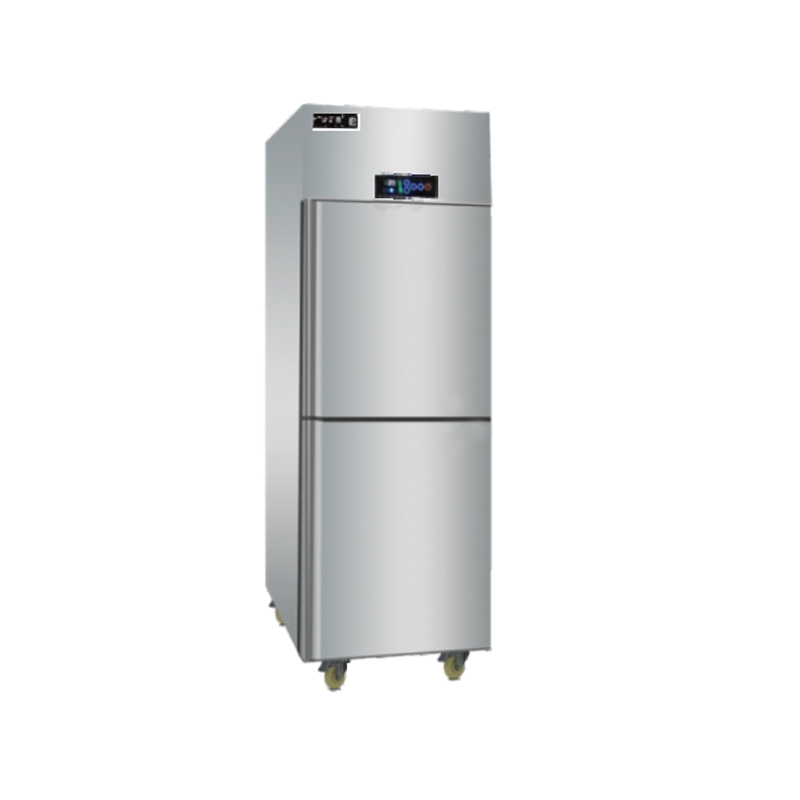
The lifespan of a commercial refrigerator is directly proportional to the consistency of its maintenance schedule. Neglecting simple tasks can lead to compressor failure, which is often the most expensive component to replace. Beyond mechanical failure, poorly maintained units consume significantly more electricity as the motor struggles to compensate for restricted airflow or leaking seals. Establishing a daily and monthly checklist is the most effective way to protect your investment and ensure food safety.
Energy consumption is one of the highest ongoing costs for any commercial kitchen. Energy Star-rated commercial refrigerators utilize high-efficiency ECM motors and improved insulation to reduce energy usage by as much as 40% compared to standard models. Additionally, many regions now mandate the use of natural refrigerants like R290 (propane), which have a much lower Global Warming Potential (GWP) than traditional HFCs. Transitioning to these models not only lowers utility bills but also ensures the business stays ahead of environmental regulations and carbon footprint targets.

No.8 Xinhua Road, Dianshanhu Town, Kunshan City, Suzhou, Jiangsu Province, China
Call Us: +86-18217685733 / +86-18221531811
E-mail: [email protected] / [email protected]
Copyright © Jiangsu Bingluo Refrigeration Equipment Co., Ltd. All Rights Reserved. Commercial Refrigeration Equipment Solutions