 English
 русский
 Español
 عربى
عربىIndustry News
Home / News / Industry News / Maximizing Efficiency: The Ultimate Guide to Selecting Commercial Horizontal Freezers for High-Volume Retail
2026-01-04
Content
Commercial horizontal freezers, often referred to as chest freezers or island freezers, are essential for businesses that require high-capacity storage and easy access to frozen goods. Unlike vertical units, horizontal freezers excel at maintaining consistent internal temperatures because cold air naturally settles at the bottom and stays there even when the lid is opened. This inherent design efficiency reduces the workload on the compressor, extending the lifespan of the equipment while ensuring that temperature-sensitive inventory remains safely frozen. When selecting a unit, it is vital to consider the insulation thickness and the type of cooling system—forced air versus static cooling—to match the specific demands of your retail or kitchen environment.
Modern horizontal freezers utilize high-density polyurethane insulation to minimize thermal transfer. For businesses looking to reduce operational overhead, selecting units with Energy Star ratings or those using R290 (propane) refrigerant is highly recommended. These refrigerants are not only environmentally friendly with low Global Warming Potential (GWP) but also offer superior thermodynamic properties that result in faster pull-down times and lower electricity consumption.
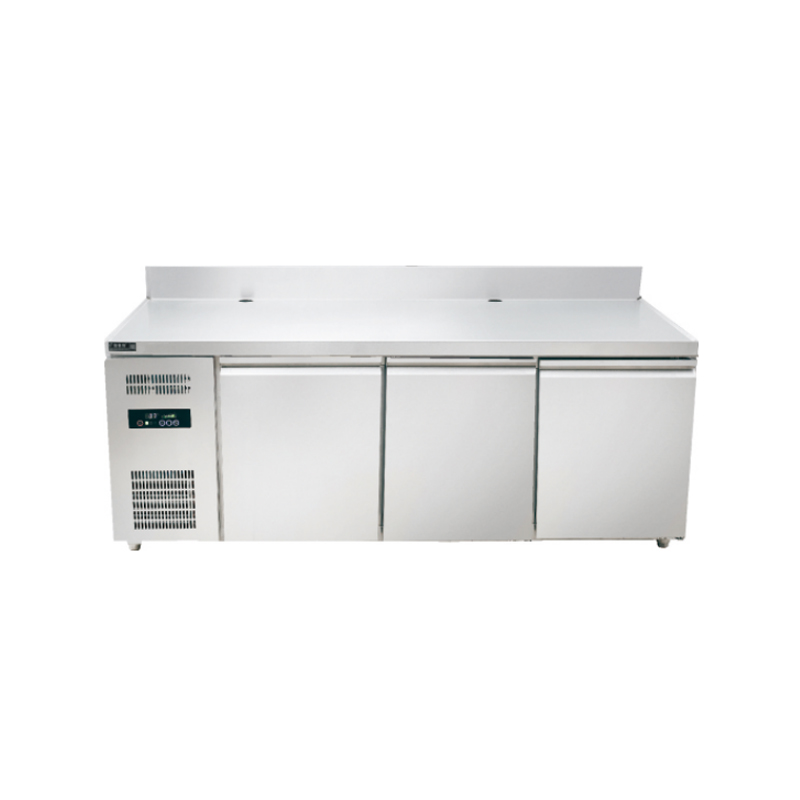
The choice between a glass-top and a solid-lid horizontal freezer depends entirely on whether the unit is intended for front-of-house merchandising or back-of-house storage. Glass-top models are designed to drive impulse purchases by providing clear visibility of products like ice cream or frozen entrees. Conversely, solid-lid models offer better insulation properties and are more durable for heavy-duty storage where visual display is not a priority. Below is a comparison of features to help guide your purchasing decision:
| Feature | Sliding Glass Lid | Solid Flip-Up Lid |
| Primary Use | Retail Merchandising | Bulk Inventory Storage |
| Thermal Retention | Moderate | Excellent |
| Visibility | High (Heat-reflective glass) | None |
| Maintenance | Daily glass cleaning required | Low maintenance |
To maintain the longevity of a commercial horizontal freezer, a strict maintenance schedule must be followed. Because these units are prone to frost buildup (unless they are equipped with an automatic defrost system), manual defrosting is often necessary to ensure the evaporator coils function at peak efficiency. Excessive ice buildup acts as an insulator, forcing the motor to run longer and increasing the risk of mechanical failure. Additionally, ensuring proper airflow around the external condenser is critical for heat dissipation.
One of the challenges of horizontal freezers is the "bottomless pit" effect, where items at the bottom are forgotten or difficult to reach. Utilizing heavy-duty wire baskets is the most effective way to organize inventory. These baskets allow for "First In, First Out" (FIFO) inventory management, ensuring that older stock is moved to the top. Many commercial models come with adjustable or stackable basket systems that allow operators to categorize products by type, which significantly reduces the time the lid stays open, further enhancing energy savings and maintaining product integrity.

No.8 Xinhua Road, Dianshanhu Town, Kunshan City, Suzhou, Jiangsu Province, China
Call Us: +86-18217685733 / +86-18221531811
E-mail: [email protected] / [email protected]
Copyright © Jiangsu Bingluo Refrigeration Equipment Co., Ltd. All Rights Reserved. Commercial Refrigeration Equipment Solutions