 English
 русский
 Español
 عربى
عربىIndustry News
Home / News / Industry News / Industrial Flake Ice Machine Buying Guide: How to Pick the Right One for Your Business
2026-07-08
Content
An industrial flake ice machine is heavy-duty refrigeration equipment designed to produce large volumes of thin, curved ice flakes rather than solid cubes or blocks. Inside the machine, water is sprayed or flows continuously over a rotating or stationary freezing drum, where it freezes into a thin layer almost instantly. A blade or auger mechanism then scrapes this frozen layer off the drum's surface, breaking it into small, irregular flake-shaped pieces that fall into a storage bin below.
Unlike a standard commercial flake ice maker built for cafes or bars, an industrial flake ice machine is engineered for continuous, high-volume operation, often running non-stop in demanding environments such as fish processing plants, concrete production sites, and large-scale food distribution centers. These machines are typically built with more robust compressors, thicker stainless steel components, and higher daily output capacities, sometimes producing several tons of ice flakes per day.
Flake ice has distinct physical properties that make it far more practical than cube or block ice for many industrial and commercial applications. Its thin, irregular shape allows it to conform closely around irregularly shaped objects, which is exactly why so many industries depend on a reliable flake ice production machine as part of their daily operations.
While many people associate flake ice with seafood displays, the actual range of industries relying on industrial-grade ice flaking equipment is much broader and includes several sectors where temperature control is critical to product quality or process integrity.
Fishing vessels and seafood processing plants rely heavily on a flake ice machine for fishing operations because flake ice cools catch rapidly upon harvest, slowing bacterial growth and preserving freshness during transport to market or processing facilities.
In large-scale concrete production, especially in hot climates, flake ice is mixed directly into concrete batches to control curing temperature and prevent cracking caused by excess heat generated during the cement hydration process.
Meat and poultry processing facilities use flake ice to maintain safe product temperatures during cutting, grinding, and packaging stages, where consistent cooling directly impacts food safety compliance and shelf life.
Certain chemical reactions and pharmaceutical production processes require precise temperature control, and flake ice offers a practical, large-surface-area cooling medium that integrates easily into industrial mixing and reaction vessels.
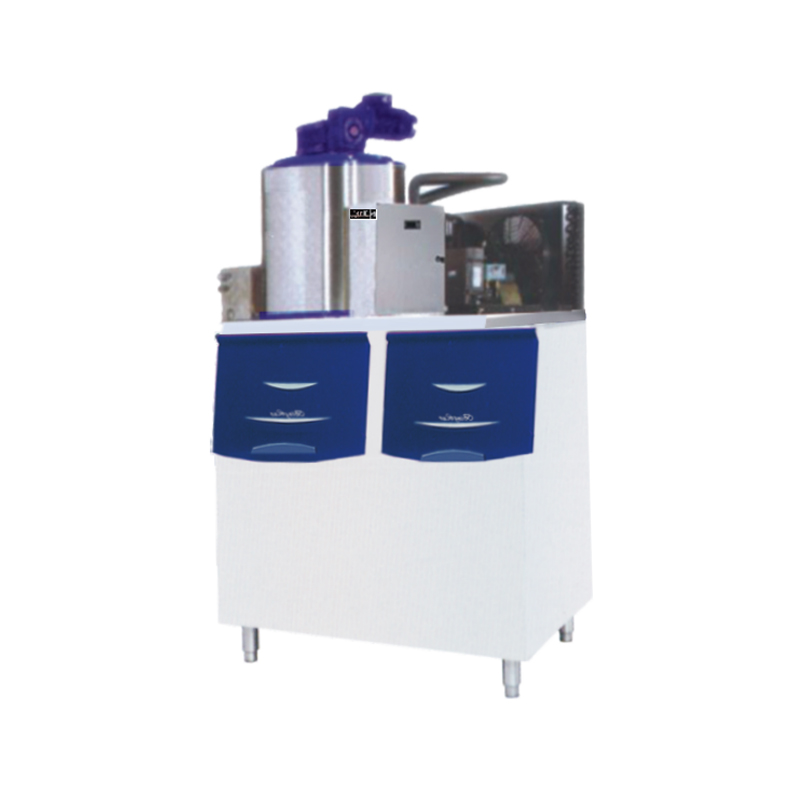
Selecting the correct daily ice production capacity is one of the most important decisions when investing in a large capacity flake ice machine, since undersizing leads to production bottlenecks while oversizing wastes both capital and energy. The table below offers a general guideline based on common industrial use cases.
| Application | Typical Daily Capacity Needed |
| Small Fishing Vessel | 1 - 5 tons |
| Mid-Size Seafood Processing Plant | 5 - 20 tons |
| Large Concrete Batching Plant | 20 - 50 tons |
| Large-Scale Food Distribution Center | 50+ tons |
Flake ice machine cost varies significantly based on production capacity, build materials, and refrigeration technology, so it helps to understand what drives price differences before comparing supplier quotes. Buyers who focus only on the sticker price often overlook factors that heavily influence long-term operating expenses.
Compressor brand and refrigerant type play a major role in both upfront cost and energy efficiency, with well-known compressor brands typically costing more initially but offering better reliability and lower long-term maintenance expenses. Stainless steel grade used in the evaporator drum and housing also affects price, since higher-grade stainless steel resists corrosion better in humid or saltwater-adjacent environments common in seafood processing. Additionally, machines with advanced automation features, such as automatic water level control and remote monitoring capabilities, generally carry a higher price tag but reduce labor costs and downtime over the equipment's lifespan.
Industrial flake ice machines operate under constant demand, which makes proactive maintenance essential to avoid costly production downtime. Establishing a consistent maintenance schedule extends equipment lifespan and helps maintain consistent ice quality and output volume.
Before finalizing a purchase, it's worth asking suppliers a focused set of questions to ensure the equipment matches your specific operational needs and avoids costly mismatches after installation.

No.8 Xinhua Road, Dianshanhu Town, Kunshan City, Suzhou, Jiangsu Province, China
Call Us: +86-18217685733 / +86-18221531811
E-mail: [email protected] / [email protected]
Copyright © Jiangsu Bingluo Refrigeration Equipment Co., Ltd. All Rights Reserved. Commercial Refrigeration Equipment Solutions