
 English
 русский
 Español
 عربى
عربىIndustry News
2026-07-14
Industry News
Why a Crescent Shaped Ice Maker Might Be Your Best Upgrade Yet
Content
- 1 What Makes a Crescent Shaped Ice Maker Different From Other Ice Machines
- 2 How a Crescent Ice Maker Produces Its Signature Shape
- 3 Comparing Crescent Ice to Other Popular Ice Shapes
- 4 Key Features to Look for When Buying a Crescent Ice Maker
- 5 Maintaining Your Crescent Shaped Ice Maker
- 6 Common Problems and Simple Fixes
- 7 Final Thoughts on Choosing a Crescent Shaped Ice Maker
What Makes a Crescent Shaped Ice Maker Different From Other Ice Machines
A crescent shaped ice maker produces curved, half-moon ice pieces instead of the standard cubes most people associate with home refrigerators. This distinctive shape isn't just about looks, crescent ice has a larger surface area relative to its volume compared to solid cubes, which affects how quickly it melts, how it packs together in a cup, and even how it sounds when it hits a glass. Restaurants, bars, hotels, and increasingly home kitchens have gravitated toward this ice style because it delivers a genuinely better drinking experience without the excessive dilution that comes from smaller, faster-melting ice shapes.
Because crescent ice pieces are hollow or curved rather than solid blocks, they melt at a slower rate than crushed ice while still cooling drinks quickly thanks to that expanded surface contact. This balance has made crescent shaped ice one of the most requested ice styles in commercial food service, and it's a big reason why so many under-counter and countertop ice makers marketed toward serious home bartenders and coffee shop owners specifically produce this shape.
How a Crescent Ice Maker Produces Its Signature Shape
Understanding the mechanics behind crescent ice production helps explain why these machines are built differently from standard cube or nugget ice makers.
The Evaporator Plate and Freezing Cycle
Inside a crescent shaped ice maker, water is sprayed or flowed continuously over a refrigerated evaporator plate molded with curved, crescent-shaped cavities. As refrigerant circulates through the plate, water freezes in layers against these curved molds, gradually building up the characteristic crescent form over the course of the freezing cycle, which typically takes anywhere from ten to twenty minutes depending on the machine's capacity and ambient conditions.
The Harvest Cycle
Once the ice reaches the correct thickness, the machine automatically switches to a harvest cycle, briefly reversing the refrigerant flow to warm the evaporator plate just enough to loosen the frozen crescents. Gravity then drops the finished ice pieces into a storage bin below, and the cycle immediately restarts to begin forming the next batch.
Comparing Crescent Ice to Other Popular Ice Shapes
Choosing the right ice shape for your establishment or home setup depends on how the ice will be used. Here's how crescent ice stacks up against other common options.
| Ice Type | Melt Rate | Best Use |
| Crescent Shaped Ice | Moderate | Soft drinks, water, cocktails |
| Full Ice Cubes | Slow | Spirits, slow-sipping drinks |
| Nugget Ice | Fast | Soft drinks, chewable ice fans |
| Flake Ice | Very Fast | Seafood display, blended drinks |
Crescent shaped ice sits comfortably in the middle of this spectrum, melting slower than nugget or flake ice while still cooling drinks efficiently, which explains why it's become the go-to choice for restaurants serving everything from soft drinks to cocktails without wanting drinks to become watered down too quickly.
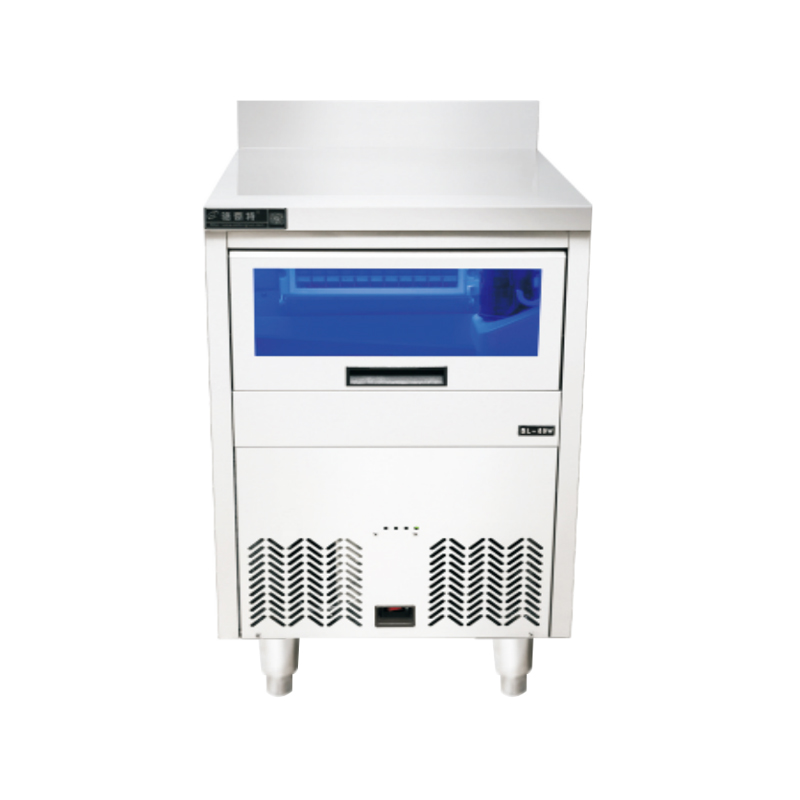
Key Features to Look for When Buying a Crescent Ice Maker
Not all crescent shaped ice makers are built to the same standard, and knowing what to prioritize helps you choose a machine that fits your production needs and budget.
- Daily ice production capacity, measured in pounds of ice produced per 24-hour period
- Storage bin size, which determines how much ice can be held on hand without overworking the machine
- Air-cooled versus water-cooled condenser systems, affecting energy use and water consumption
- Built-in water filtration to reduce mineral buildup and improve ice clarity and taste
- Ease of access for cleaning the evaporator plate and water reservoir
- Noise level, particularly important for countertop units placed in living or dining spaces
Water-cooled crescent ice makers tend to produce ice more efficiently in hot kitchen environments, but they also use significantly more water than air-cooled models, which is worth factoring into ongoing operating costs, especially in regions where water usage fees are high.
Maintaining Your Crescent Shaped Ice Maker
Routine maintenance keeps a crescent ice maker running efficiently and prevents the buildup of mineral scale or bacteria that can affect ice quality and machine performance over time.
Descale the Evaporator Plate Regularly
Mineral deposits from hard water gradually build up on the evaporator plate, reducing freezing efficiency and eventually affecting ice shape and clarity. Most manufacturers recommend descaling every three to six months using a food-safe descaling solution, though machines in areas with harder water may need more frequent attention.
Clean and Sanitize the Storage Bin
Since ice sits directly in the storage bin before use, this compartment should be cleaned and sanitized on a regular schedule to prevent mold or bacterial growth, particularly important for commercial kitchens subject to health inspections.
Common Problems and Simple Fixes
Even well-maintained crescent ice makers occasionally run into issues. Here are a few common problems and what usually causes them.
- Ice pieces coming out smaller or misshapen, often caused by low water flow or mineral buildup on the evaporator
- Machine running but producing no ice, which frequently points to a refrigerant issue or a failed water inlet valve
- Cloudy or discolored ice, usually a sign that water filtration needs replacing or the reservoir needs cleaning
- Unusual noise during the harvest cycle, which can indicate a loose component or a developing mechanical issue
Many of these issues can be resolved through routine cleaning and filter replacement, though persistent mechanical noises or refrigerant-related problems typically require a qualified technician rather than a DIY fix.
Final Thoughts on Choosing a Crescent Shaped Ice Maker
A crescent shaped ice maker offers a genuine upgrade for anyone who cares about how their drinks taste and feel, striking a practical balance between cooling power and melt rate that solid cubes or fast-melting nugget ice can't quite match. Whether you're outfitting a restaurant bar, a coffee shop, or simply want better ice at home, paying attention to production capacity, maintenance requirements, and water-cooling needs will help you choose a machine that delivers consistent, high-quality crescent ice for years to come. With a bit of regular upkeep, this style of ice maker can become one of the most valued pieces of equipment in any beverage service setup.
Related Products

No.8 Xinhua Road, Dianshanhu Town, Kunshan City, Suzhou, Jiangsu Province, China
Call Us: +86-18217685733 / +86-18221531811
E-mail: [email protected] / [email protected]
Copyright © Jiangsu Bingluo Refrigeration Equipment Co., Ltd. All Rights Reserved. Commercial Refrigeration Equipment Solutions
