 English
 русский
 Español
 عربى
عربىIndustry News
Home / News / Industry News / Ice Maker Machine Buying Guide: Types, Features, and Everything You Need to Know
2026-05-07
Content
An ice maker machine is a standalone or built-in appliance designed to produce ice automatically and continuously without the need for manual ice trays or frequent freezer intervention. Unlike the basic ice-making function built into most household refrigerators — which produces a limited quantity of cubes slowly — a dedicated ice making machine is engineered specifically for ice production, delivering consistent output in larger volumes and at faster cycle times. Depending on the model and capacity, an ice maker can produce anywhere from a few kilograms per day for countertop home units up to hundreds or even thousands of kilograms per day for commercial ice machines used in restaurants, hotels, hospitals, and food processing facilities.
The working principle of most ice maker machines is based on a refrigeration cycle. A refrigerant compresses and expands through a sealed system, drawing heat away from a set of evaporator plates or fingers. Water from a reservoir is pumped over or into the cold evaporator surface, where it freezes progressively into the target ice shape. Once the ice reaches the correct thickness or weight, the machine initiates a brief harvest cycle — typically using a short burst of warm refrigerant or a resistance heater — that releases the ice from the evaporator surface, allowing it to fall into a storage bin below. The cycle then repeats continuously as long as the bin has space and water is available.
Ice maker machines are available in a wide range of configurations, each designed for different ice types, production volumes, installation environments, and user needs. Understanding the main categories helps narrow down which type of ice machine is appropriate for a given application.
Countertop portable ice maker machines are compact, self-contained units designed for home use, small offices, RVs, boats, and outdoor entertaining. They sit on a kitchen counter or tabletop, plug into a standard electrical outlet, and do not require a permanent water line connection — instead, the user fills a built-in water reservoir manually. Most portable ice makers produce bullet-shaped or cylindrical ice and can generate between 10 and 15 kg of ice per day, with the first batch of ice typically ready within 6 to 15 minutes of startup. They do not have a true freezer storage bin — ice that is not used melts back into the reservoir and is recycled into the next production cycle. These machines are valued for their convenience and low cost but are not suitable for applications requiring large quantities of stored ice.
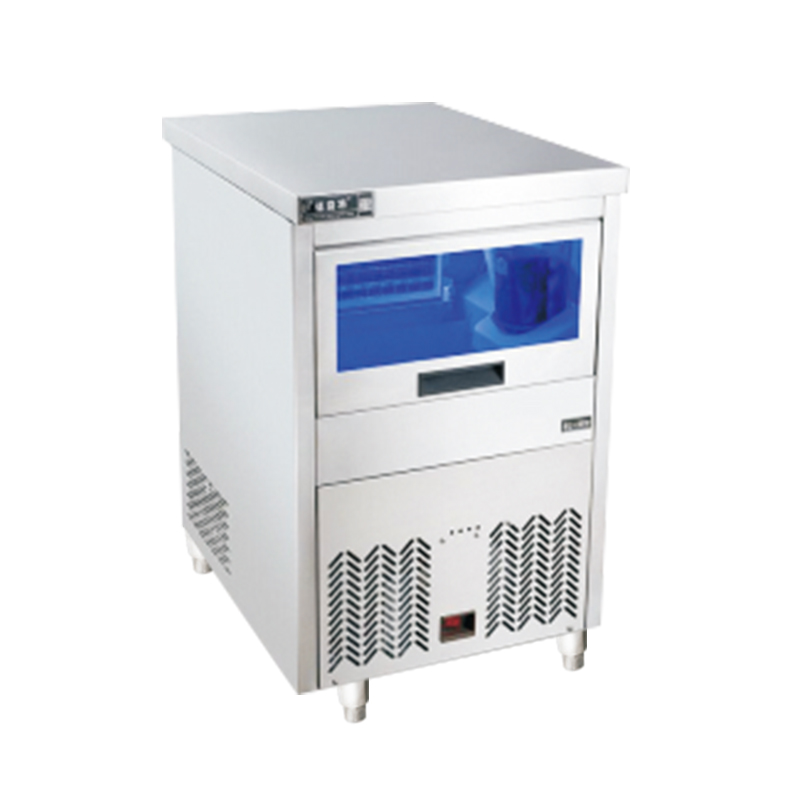
Undercounter ice machines are designed to be installed beneath a counter — in a kitchen, bar, or beverage station — with a permanent water line connection and a drain line. They produce significantly more ice than portable models, typically between 20 and 80 kg per day, and include an insulated storage bin that keeps produced ice frozen until it is needed. Undercounter ice makers are a popular choice for home bars, outdoor kitchens, small cafes, and office break rooms where a consistent supply of ice is needed without the footprint of a full commercial unit. They are available in both freestanding and fully integrated versions that fit within standard cabinetry.
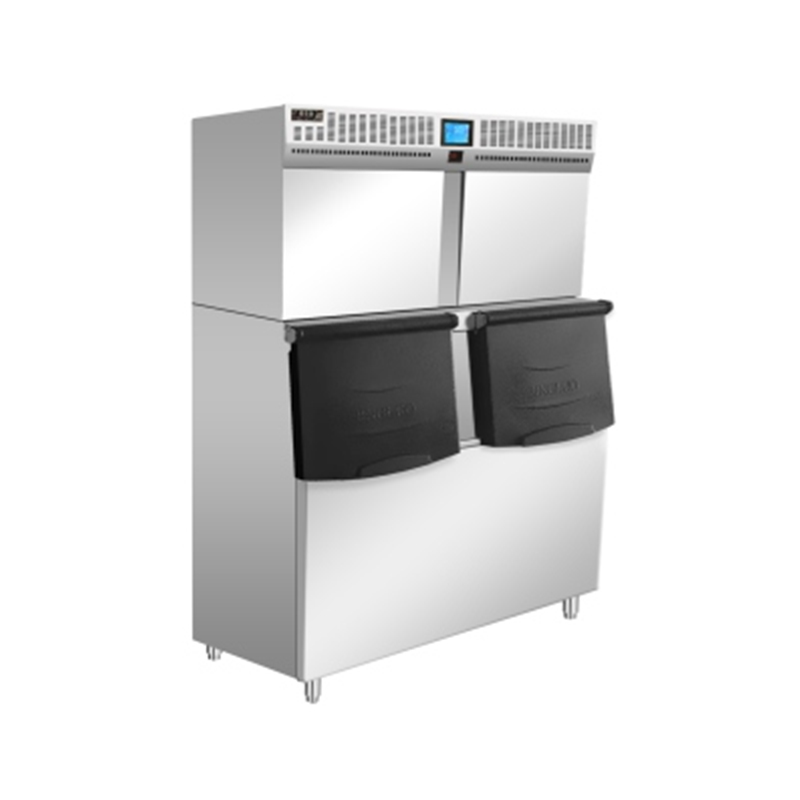
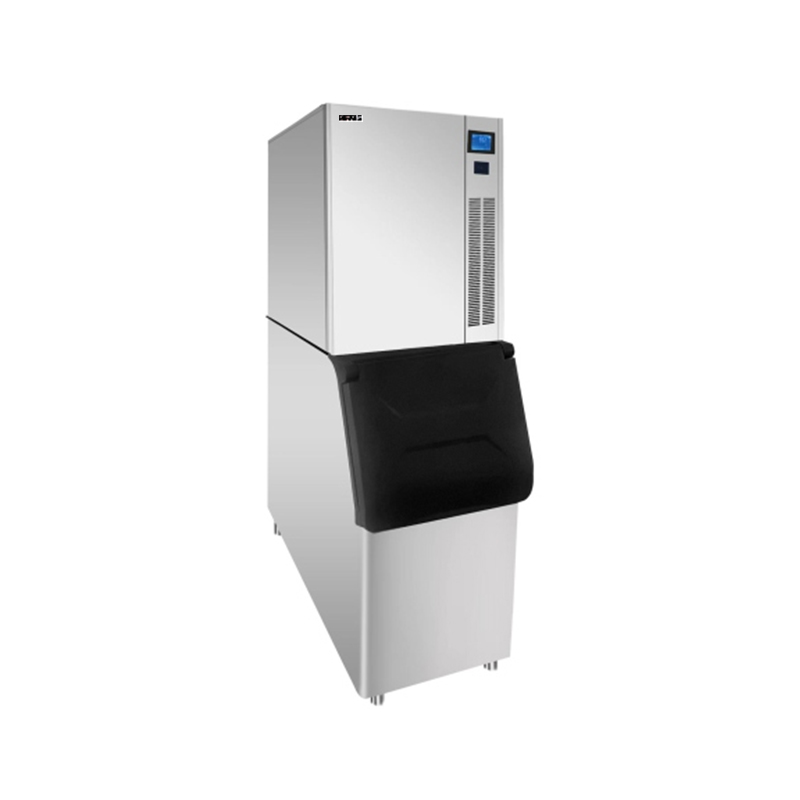
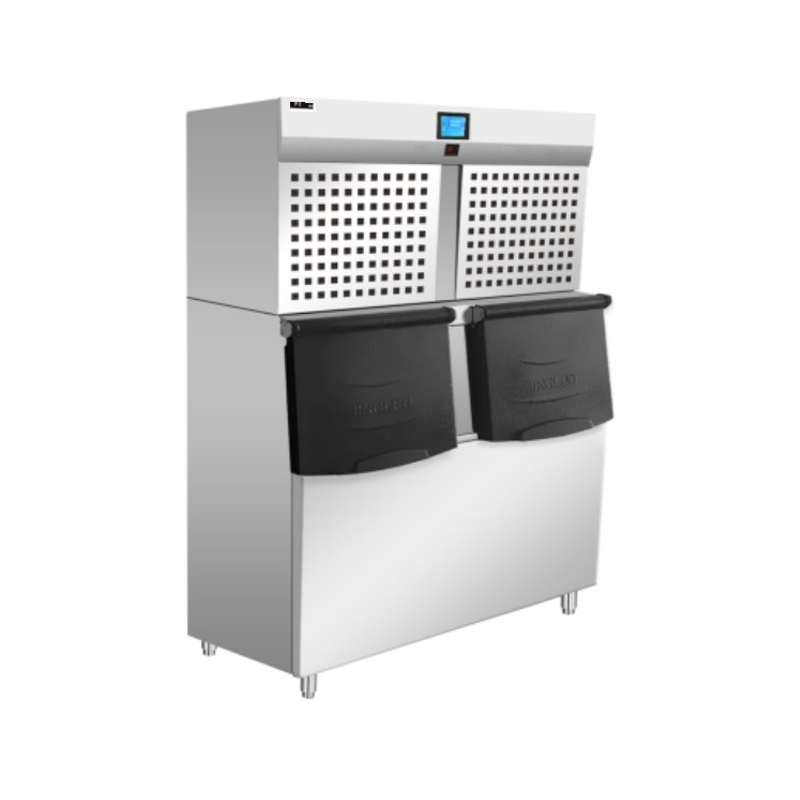
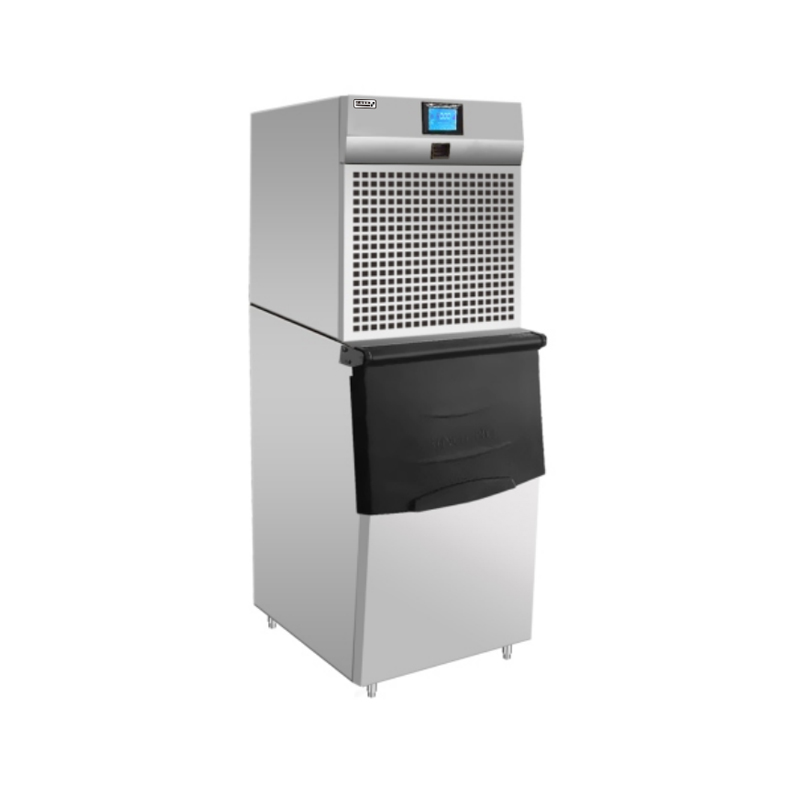
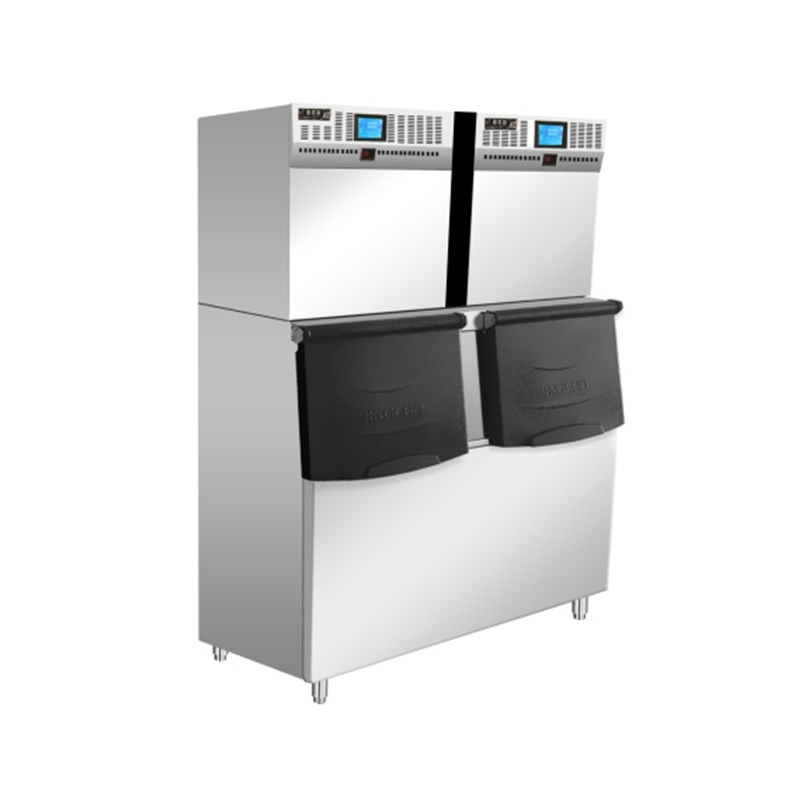
Modular ice maker machines are the workhorses of the commercial ice industry. The ice-making head unit — which contains the refrigeration system and evaporator — sits on top of a separate storage bin or ice dispenser, allowing the two components to be sized independently. A high-capacity modular ice machine head can produce anywhere from 100 to over 1,000 kg of ice per day depending on the model and ambient conditions, and the storage bin beneath can be matched to the production rate and consumption pattern of the specific application. Modular units are the standard choice for restaurants, hotels, hospitals, sports facilities, and any commercial environment where large and consistent ice supply is critical.
Self-contained commercial ice makers combine the ice-making mechanism and the storage bin in a single integrated unit, similar in concept to undercounter machines but available in larger sizes for commercial use. They are easier to install than modular systems because there is no separate bin to position and connect, and they fit more compactly in tight commercial spaces. Production capacities range from around 40 to 250 kg per day. These units are well suited for smaller foodservice operations, convenience stores, healthcare facilities, and hotel in-room ice service areas where space efficiency is as important as ice output.
Nugget ice makers and flake ice machines use fundamentally different evaporator designs compared to standard cube ice machines and produce ice forms with distinct physical properties valued in specific applications. Nugget ice — also called pellet ice or chewable ice — is produced by extruding partially frozen water through small openings, creating soft, cylindrical nuggets that are easy to chew, absorb beverages quickly, and pack well around items being cooled. It is extremely popular in healthcare settings and casual dining chains. Flake ice machines produce thin, irregularly shaped flakes of ice by scraping a thin layer of frozen water from the inside of a cylindrical evaporator drum. Flake ice is the standard choice for seafood and produce display cases, medical cooling applications, and food processing because its irregular shape conforms closely around products being chilled without bruising them.
The shape and density of ice are not purely aesthetic considerations — different ice forms have meaningfully different performance characteristics in terms of cooling efficiency, melt rate, clarity, texture, and suitability for specific beverages or food applications. Most ice makers are designed to produce one specific ice type, so knowing which form you need is an important part of the selection process.
| Ice Type | Appearance | Melt Rate | Best Applications | Machine Type |
| Full Cube | Clear, square, ~3cm | Slow | Spirits, cocktails, water service | Cube ice machine |
| Half Cube | Clear, half-size cube | Medium | Soft drinks, blended drinks, general use | Cube ice machine |
| Nugget / Pellet | Soft, cylindrical, chewable | Medium-Fast | Healthcare, fast food, smoothies | Nugget ice maker |
| Flake | Thin, irregular, opaque | Fast | Seafood display, food processing, medical | Flake ice machine |
| Crescent | Clear, curved shape | Medium | Fountain drinks, general beverage service | Cube ice machine |
| Gourmet / Clear | Large, crystal-clear block | Very Slow | Premium cocktails, upscale beverage service | Gourmet ice machine |
Selecting the right ice maker machine involves more than picking the most affordable option or the one with the highest daily ice output on the specification sheet. Several interconnected factors determine whether a machine will meet your actual needs in real-world operating conditions.
Ice machine production capacity is rated in kilograms or pounds of ice produced per 24 hours under standard test conditions — typically defined as 21°C ambient air temperature and 10°C incoming water temperature. Real-world production will be lower if your installation environment is warmer than these test conditions, because refrigeration systems work harder and less efficiently in higher ambient temperatures. As a general planning rule, assume actual production will be approximately 20–25% less than the rated capacity in a typical commercial kitchen or warm residential environment. For commercial applications, calculate your peak daily ice demand first, then select a machine with a rated capacity at least 20% above that figure to ensure you never run short during busy periods.
Ice production capacity and storage bin capacity are two separate specifications that must both be matched to your usage pattern. A machine that produces 150 kg of ice per day but has only a 30 kg storage bin will overflow if demand is not continuous — and conversely, a large bin paired with a slow ice head will leave you short during peak demand. The general guideline for foodservice operations is to size the storage bin to hold roughly 50–100% of peak daily ice demand, providing a buffer against demand spikes and brief equipment maintenance periods. For home and light-commercial applications, a smaller ratio is usually acceptable.
Ice maker machines are available with either air-cooled or water-cooled condenser systems, and the choice significantly affects installation requirements and operating costs. Air-cooled ice machines — by far the most common type — reject heat through a condenser that draws ambient air across refrigerant coils, requiring adequate ventilation clearance around the machine and performing less efficiently in hot environments. Water-cooled machines use a flow of water to cool the condenser instead of air, which makes them more efficient in warm environments and allows installation in enclosed spaces without ventilation clearance, but they consume significant amounts of water — typically 2 to 3 liters of water per kilogram of ice produced — adding substantially to operating costs in areas with high water costs or water scarcity concerns.
Water quality has a major impact on ice clarity, taste, production efficiency, and the longevity of the ice machine itself. Hard water with high mineral content leads to scale buildup on the evaporator and water distribution system, reducing heat transfer efficiency and eventually causing premature component failure. Chlorinated municipal water can affect ice taste and may accelerate corrosion of internal components. Most commercial ice machine manufacturers recommend installing an in-line water filter system — sized and rated for the specific water conditions at the installation site — as a standard part of the installation. In areas with very hard water, a water softener or scale inhibitor may also be necessary. Testing your water before installation and specifying appropriate filtration avoids a large proportion of the service calls and premature failures that plague commercial ice machines in service.
Ice maker machines run continuously, so energy consumption is a significant ongoing operating cost, particularly in commercial settings. In the United States, the Energy Star certification program rates commercial ice machines on the basis of energy consumption per 100 pounds (approximately 45 kg) of ice produced and water consumption per 100 pounds of ice. Choosing an Energy Star certified ice machine over a standard model can reduce energy consumption by 15–20% and water consumption by up to 10%, which translates to meaningful cost savings over the 7–10 year service life of a commercial unit. For home ice makers, look for units with efficient compressor technology and insulated storage bins that reduce the energy needed to keep produced ice frozen.
Proper installation is critical to the performance and longevity of any ice maker machine, whether it's a compact countertop unit or a large commercial system. Cutting corners during installation is a leading cause of poor performance, frequent service calls, and shortened equipment life.
Regular maintenance is the single most important factor in keeping an ice maker machine producing clean, correctly formed ice at its rated capacity over its full service life. Neglected ice machines not only produce less ice but are also a potential food safety risk, as the warm, moist interior environment of an ice machine is conducive to mold, slime, and bacterial growth if not cleaned on a proper schedule.
Commercial ice machines should be cleaned and sanitized at least every six months — and more frequently in environments with heavy use, hard water, or poor air quality. The cleaning process involves running an approved ice machine cleaner (typically a nickel-safe acid solution) through the water system to dissolve mineral scale from the evaporator, water distribution tube, and float valve. This is followed by a sanitizing cycle using an approved sanitizer solution to kill bacteria, mold, and slime-forming organisms. All removable components — including the storage bin, bin liner, and any accessible water system parts — should be manually cleaned and sanitized as part of each service. Most ice machine manufacturers publish detailed step-by-step cleaning procedures for their specific models, and following these exactly — rather than improvising — ensures thorough cleaning without damage to internal components.
Air-cooled ice machines draw large volumes of air across the condenser coil, and any airborne grease, dust, or lint that accumulates on the condenser reduces heat transfer efficiency progressively. In commercial kitchen environments where cooking grease is present in the air, condenser cleaning may be needed as frequently as monthly. Check and clean the air filter (if present) and inspect the condenser coil surface every 1 to 3 months depending on the environment. Use a soft brush or low-pressure air to remove surface debris, and follow with a condenser cleaning solution if grease buildup is present. A dirty condenser is one of the most common causes of reduced ice production and premature compressor failure in commercial ice machines.
In-line water filters should be replaced according to the manufacturer's recommended schedule — typically every six months for most commercial cartridge filters, or when a pressure drop across the filter indicates it is becoming blocked. An expired water filter that is left in place can become a source of contamination rather than a protection against it, as bacteria can colonize a saturated filter media. Keep a log of filter replacement dates and set a reminder to ensure filters are changed on schedule rather than reactively when problems appear.
The appearance and quality of the ice produced by your machine is a useful ongoing diagnostic indicator. Cloudy or white ice (in a machine designed to produce clear ice) indicates high mineral content in the water supply or a water filter that needs replacement. Thin, incomplete, or misshapen ice cubes suggest scale buildup on the evaporator, insufficient water flow, or a harvest timing issue. Ice with an off taste or odor indicates biological contamination in the water system or bin that requires immediate cleaning and sanitizing. Addressing these signs promptly prevents minor issues from developing into major mechanical failures.
Even well-maintained ice maker machines occasionally develop problems. Many of the most frequent issues have straightforward causes and solutions that can be addressed without a service call, provided you understand what to look for.
The distinction between home and commercial ice maker machines is not simply a matter of size — the two categories differ in construction quality, component durability, production continuity, service infrastructure, and total cost of ownership in ways that matter significantly when choosing the right machine for a specific setting.
| Feature | Home / Portable Ice Maker | Undercounter Ice Maker | Commercial Ice Machine |
| Daily Ice Output | 10–15 kg | 20–80 kg | 100–1,000+ kg |
| Water Connection | Manual fill reservoir | Permanent plumbing | Permanent plumbing |
| Drain Required | No | Yes | Yes |
| Ice Storage | No freezer bin (melts back) | Insulated bin included | Large insulated bin |
| Typical Price Range | $80–$300 | $500–$2,500 | $1,500–$10,000+ |
| Expected Service Life | 2–5 years | 5–10 years | 7–15 years |
| Best For | Home, RV, occasional use | Home bar, small office, café | Restaurant, hotel, hospital |

No.8 Xinhua Road, Dianshanhu Town, Kunshan City, Suzhou, Jiangsu Province, China
Call Us: +86-18217685733 / +86-18221531811
E-mail: [email protected] / [email protected]
Copyright © Jiangsu Bingluo Refrigeration Equipment Co., Ltd. All Rights Reserved. Commercial Refrigeration Equipment Solutions