
 English
 русский
 Español
 عربى
عربىIndustry News
2026-08-18
Industry News
Flake Ice Machine for Seafood: Why It's the Secret to Fresher Catch
Content
- 1 Why Seafood Businesses Can't Skip a Flake Ice Machine
- 2 How Flake Ice Actually Protects Seafood Quality
- 3 Where Flake Ice Machines Get Used in the Seafood Supply Chain
- 4 Choosing the Right Size and Output for Your Business
- 5 Key Features to Look for in a Seafood Flake Ice Maker
- 6 Maintenance Tips to Keep Your Flake Ice Machine Running Smoothly
- 7 Getting the Most Value From Your Investment
Why Seafood Businesses Can't Skip a Flake Ice Machine
If you've ever walked past a fish counter and noticed the catch sitting on a bed of soft, snow-like ice, you were looking at flake ice in action. A flake ice machine for seafood isn't just a nice-to-have piece of equipment — it's often the single biggest factor separating fresh, restaurant-quality seafood from product that spoils before it ever reaches a customer's plate. Unlike cube ice or block ice, flake ice is thin, dry, and irregularly shaped, which lets it wrap around fish, shrimp, and shellfish without bruising the flesh or leaving sharp edges that puncture skin.
Seafood is one of the most perishable foods sold commercially. Bacteria growth accelerates rapidly once the internal temperature of fish rises above freezing, and even a few hours of inadequate cooling can turn a prime catch into a food safety risk. That's why fishing boats, wholesale markets, grocery stores, and restaurants all lean on dedicated flake ice equipment rather than general-purpose ice makers.
How Flake Ice Actually Protects Seafood Quality
The science behind flake ice is simple but effective. Flake ice is produced in thin layers, typically between 1.5mm and 3mm thick, with a high surface area relative to its volume. This means it melts more slowly than cube ice while still cooling the seafood extremely fast on contact, because the flakes conform tightly around every curve of a fish or shrimp instead of leaving air gaps.
Faster, Even Cooling
Because flake ice molds itself around the product, it brings the seafood's surface temperature down to near-freezing almost immediately. This rapid cooling slows enzymatic breakdown and bacterial growth, which is the main reason seafood packed in flake ice stays fresh noticeably longer than seafood stored with block or cube ice.
No Physical Damage
Cube ice has hard edges that can bruise delicate fillets or crack the shells of crab and lobster. Flake ice is soft and pliable, so it cushions the seafood rather than damaging it, preserving both appearance and texture — two things that directly affect how much a customer is willing to pay.
Better Moisture Control
Flake ice keeps seafood moist without soaking it, which helps maintain the natural weight and appearance of the product. This is especially important for retailers who sell seafood by weight, since properly iced product loses less mass to dehydration compared to poorly cooled seafood.
Where Flake Ice Machines Get Used in the Seafood Supply Chain
A flake ice machine for seafood shows up at nearly every stage between the ocean and the dinner table. Understanding where it fits helps you figure out what capacity and features actually matter for your operation.
- Fishing vessels use onboard flake ice machines to preserve the catch immediately after it's hauled in, often before the boat even returns to port.
- Wholesale seafood processors use larger flake ice systems to keep product cold during sorting, filleting, and packing.
- Fish markets and grocery stores use countertop or under-counter flake ice makers to keep display cases stocked throughout the day.
- Restaurants and sushi bars use smaller flake ice units to hold seafood at safe temperatures during prep and service.
- Seafood transport companies use flake ice to pack shipping containers and insulated totes for cold-chain delivery.
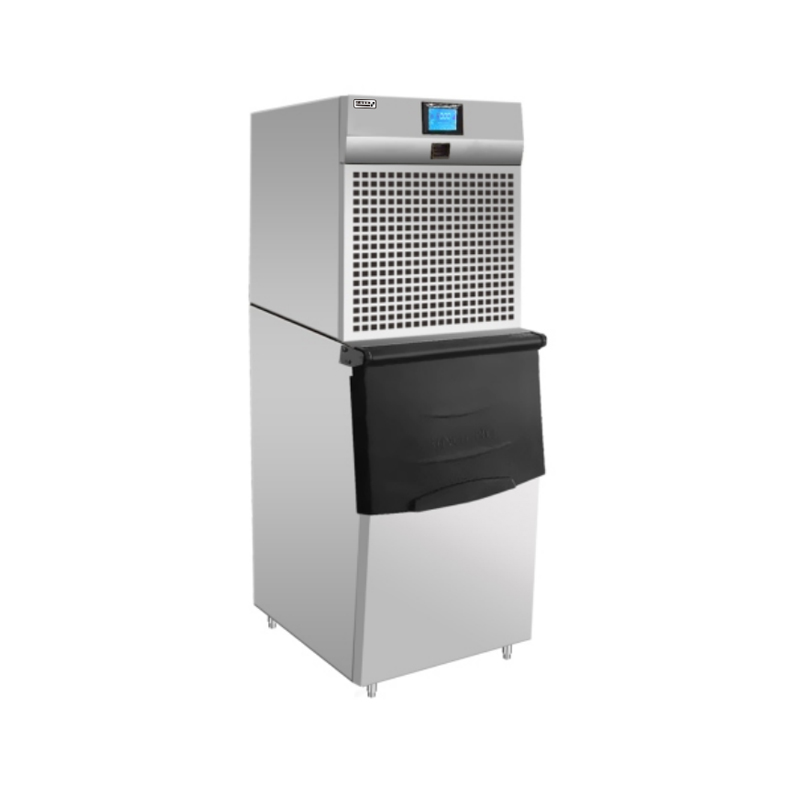
Choosing the Right Size and Output for Your Business
One of the most common mistakes seafood businesses make is buying a flake ice machine that's either too small to keep up with demand or too large for the space and budget available. Output is usually measured in pounds or kilograms of ice produced per 24 hours, and the right number depends heavily on your daily seafood volume and how long product needs to stay iced.
| Business Type | Typical Daily Ice Need | Recommended Machine Output |
| Small fish market | 100-300 lbs | 300-500 lbs/day |
| Mid-size seafood counter | 300-800 lbs | 800-1200 lbs/day |
| Wholesale processor | 1000+ lbs | 2000+ lbs/day |
| Fishing vessel (onboard) | Varies by trip length | 500-3000 lbs/day |
As a general rule of thumb, seafood needs roughly its own weight in ice to stay properly chilled during storage and display, so it's worth calculating output based on your peak sales day rather than an average day. Running short on ice during a busy weekend can quietly cost you far more in spoiled product than the machine itself would have cost.
Key Features to Look for in a Seafood Flake Ice Maker
Not all flake ice machines are built the same, and seafood applications have specific needs that general commercial kitchens don't always face. Here's what tends to matter most.
Stainless Steel Construction
Because flake ice machines used for seafood are often exposed to salt, moisture, and constant washdowns, stainless steel housing and evaporators resist corrosion far better than painted or galvanized alternatives. This directly affects how long the machine lasts before parts need replacing.
Saltwater or Seawater Compatibility
For onboard fishing vessel use, some flake ice machines are specifically engineered to run on seawater instead of freshwater, which is a major advantage when freshwater supply is limited at sea. If you're outfitting a boat, this feature alone can narrow your choices significantly.
Storage Bin Capacity
A machine's ice production rate only tells half the story — the storage bin needs to hold enough reserve ice to cover peak hours without the machine struggling to keep pace. Undersized bins are one of the most common complaints from seafood businesses that outgrow their original setup within a year or two.
Energy and Water Efficiency
Flake ice machines run almost continuously in busy seafood operations, so energy consumption and water usage add up quickly. Machines with modern compressors and efficient water-cooled or air-cooled condensers can noticeably reduce utility costs over the life of the equipment.
Maintenance Tips to Keep Your Flake Ice Machine Running Smoothly
A flake ice machine for seafood works hard, often around the clock, which means regular maintenance isn't optional. Skipping upkeep leads to reduced ice output, higher energy bills, and eventually costly breakdowns during your busiest season.
- Clean the evaporator and water system every one to three months to prevent mineral scale buildup, especially in areas with hard water.
- Sanitize the ice storage bin regularly since it comes into direct contact with food-grade ice touching seafood.
- Check water filters and replace them on schedule to protect ice quality and machine components.
- Inspect door seals and bin insulation to make sure ice isn't melting prematurely.
- Schedule professional servicing at least once a year to catch compressor or refrigerant issues before they cause downtime.
Getting the Most Value From Your Investment
A quality flake ice machine for seafood typically pays for itself through reduced spoilage, better product presentation, and fewer customer complaints about freshness. When comparing models, it's worth looking beyond the upfront price to consider energy costs, expected lifespan, warranty coverage, and how easily replacement parts are sourced locally. For businesses handling high volumes, choosing a slightly larger machine than you currently need often makes more financial sense than upgrading again in a year or two as demand grows.
Ultimately, the right flake ice equipment isn't just about making ice — it's about protecting the quality and safety of every piece of seafood that passes through your business, from the moment it's caught to the moment it reaches a customer's table.
Related Products


No.8 Xinhua Road, Dianshanhu Town, Kunshan City, Suzhou, Jiangsu Province, China
Call Us: +86-18217685733 / +86-18221531811
E-mail: [email protected] / [email protected]
Copyright © Jiangsu Bingluo Refrigeration Equipment Co., Ltd. All Rights Reserved. Commercial Refrigeration Equipment Solutions
