 English
 русский
 Español
 عربى
عربىIndustry News
Home / News / Industry News / Convenience Store Display Freezers: How to Choose, Place, and Maintain Them for Maximum Sales
2026-04-01
Content
Frozen and chilled products are among the highest-margin categories in a convenience store, and the display freezer is the equipment that sells them. Unlike a shelf of ambient products where the merchandise sells itself through packaging, a freezer cabinet actively contributes to — or actively undermines — the sales performance of everything inside it. A freezer with poor visibility, inadequate lighting, frequent frosting on glass doors, or inconsistent temperature creates a friction point that causes customers to skip the frozen category entirely, particularly impulse purchasers who weren't planning to buy frozen goods before they walked in.
At the same time, a convenience store display freezer that runs inefficiently, breaks down frequently, or requires disproportionate staff time to maintain is an operational liability that erodes the margin benefit of the frozen category. In a small retail operation with tight staffing, a freezer that needs daily defrosting, that frosts over its glass panels, or that requires frequent temperature checks to stay within food safety compliance is a significant hidden cost on top of the purchase price and electricity bill. Getting the freezer selection right from the start — matched to the store's specific product range, store layout, customer traffic pattern, and ambient environment — has a direct, measurable impact on both the top-line revenue from frozen products and the bottom-line cost of running the frozen category.
Convenience store freezer units come in several distinct configurations, each with specific strengths that make it better suited to particular product categories, store layouts, and customer shopping behaviors. Understanding these differences is the foundation of making the right equipment choice.
Upright glass door display freezers are the dominant format in modern convenience retail. They present products vertically behind one or more glass doors, allowing customers to see the full product range at a glance without opening the cabinet. The glass door design maximizes product visibility and impulse purchase potential while minimizing cold air loss compared to open-front alternatives. Multiple shelf levels make efficient use of vertical space, allowing a single unit to display a broad product range in a relatively small floor footprint. Low-E (low emissivity) coated glass, anti-fog heating elements in the door glass, and well-positioned interior LED lighting are the features that distinguish high-performing upright glass door freezers from budget alternatives — without these, glass doors frost over, visibility is poor during high-traffic periods, and the energy cost of compensating for heat ingress through uncoated glass adds significantly to operating costs.
Chest freezers for retail are horizontal units with top-opening lids — either solid or glass — that provide large storage volumes at relatively low cost. They are particularly effective for bulk-format frozen products, ice cream novelties, and ice bags, where the product category suits or benefits from the dig-in browsing behavior that chest freezer access encourages. Glass-lid chest freezers allow product visibility without opening the unit, which reduces cold air loss and product temperature fluctuation significantly compared to solid-lid chest freezers where customers must open the lid to see what is inside. The main limitations of chest freezers are their large floor footprint relative to storage capacity, the difficulty of organizing and merchandising products effectively within the deep open interior, and the physical demand of access for shorter customers and products at the bottom of the cabinet.
Open-top island freezers — also called open-well freezers or coffin cases — are low-profile units with an open top that allows customers to reach in from any side to select products. They are commonly used for ice cream impulse products, frozen novelties, and promotional frozen items where the casual, accessible browsing experience encourages impulse purchases. Because the top is open, cold air continuously spills out of the cabinet, making these units significantly more energy-intensive than closed-door alternatives. The trade-off is accepted in specific merchandising contexts — particularly for ice cream where the open-access format is strongly associated with impulse purchase behavior — but open-top island freezers are rarely appropriate as the primary frozen display format in a general convenience store frozen category, where closed-door upright units are more energy-efficient and better suited to organized product display.
Combination units integrate refrigerated and frozen sections within a single cabinet, with separate compartments maintaining different temperature zones. These units are particularly useful in smaller convenience stores with limited floor space where dedicating separate areas to a full bank of refrigerators and a separate bank of freezers is not practical. A combination display unit allows a store to offer both chilled and frozen products in a single equipment footprint with a single electrical connection. The limitation is that neither the refrigerated nor the frozen section of a combination unit will match the dedicated performance, capacity, or merchandising flexibility of a standalone single-temperature unit of equivalent overall dimensions.
When comparing convenience store display freezers, a set of technical specifications determines how the unit will actually perform in the store environment over its operational life. These parameters deserve careful evaluation rather than a simple comparison of price and brand.
| Specification | Typical Range | What to Prioritize |
| Operating Temperature | -15°C to -25°C | Consistent hold at -18°C for frozen food compliance |
| Ambient Temperature Rating | 16°C – 38°C (Class N to SN) | Must exceed maximum store ambient temperature |
| Net Display Volume | 200 – 1,500+ liters | Usable shelf capacity with standard product facings |
| Defrost System | Auto electric, hot gas, or manual | Automatic defrost with programmable cycle timing |
| Glass Door Type | Single, double, or triple pane | Triple pane Low-E with heated frame for clarity |
| Lighting Type | LED or fluorescent | LED for efficiency and heat reduction inside cabinet |
| Refrigerant Type | R290, R404A, R448A, R449A | R290 (propane) for low GWP regulatory compliance |
| Energy Consumption | 3 – 12 kWh/day depending on size | Energy Star certified models for lowest operating cost |
The glass door on a retail display freezer is simultaneously the primary sales interface and the primary source of energy loss and operational problems in the unit. The quality of the glass door assembly has a larger impact on both the commercial and operational performance of a convenience store display freezer than almost any other single component, which makes it worth understanding in detail before making a purchasing decision.
Single-pane glass doors are now largely obsolete in commercial freezer applications because they provide minimal thermal insulation, causing the outer glass surface to frost over in normal ambient conditions and requiring constant heating elements to maintain visibility — resulting in high energy consumption. Double-pane insulated glass doors are the minimum acceptable specification for a retail display freezer, providing a significant improvement in thermal insulation and reducing the tendency to frost over. Triple-pane glass with Low-E coating on the inner surfaces is the premium specification that maximizes thermal resistance, minimizes fogging and frosting during high-humidity conditions, and provides the clearest, most consistent product visibility across different ambient temperature and humidity conditions. For a convenience store operating in a humid climate or with air conditioning running during hot months that creates temperature differentials, triple-pane glass is not a luxury — it is the practical choice that avoids the chronic visibility and energy problems of lower-specification glass doors.
Even with high-quality insulated glass, the door frame — the aluminum or stainless steel perimeter that holds the glass panel and contacts the cabinet seal — can become a site of condensation and frost formation in high-humidity environments. Quality commercial display freezers incorporate low-wattage electric heating elements running through the door frame to maintain the frame surface above the dew point of the ambient air, preventing condensation from forming on the frame surface and then tracking onto the glass where it freezes and obstructs visibility. This heating system adds a small amount to the unit's electrical consumption but eliminates the time-consuming staff task of manually defrosting door frames and the customer experience problem of poorly visible product. Verify that any retail display freezer being considered includes frame heating as standard rather than as an optional extra, particularly for stores in warm, humid climates.
Self-closing door mechanisms — spring-loaded or cam-action hinges that pull the door closed after a customer releases it — are an important energy management feature on convenience store display freezers. Customer behavior in a busy convenience store routinely includes doors left partially or fully open for extended periods, which allows warm ambient air to flood the cabinet and cause significant product temperature rise as well as heavy frost formation on the evaporator. Each instance of a door left open for 30 seconds or more in a warm store represents a measurable energy cost and a potential food safety temperature excursion. Self-closing doors prevent this entirely for the majority of casual browsing incidents where a customer opens a door and then changes their mind or is distracted. Pair self-closing hinges with door open alarms — which alert staff when a door has been left open for more than a defined time — for comprehensive door management without relying entirely on customer behavior.
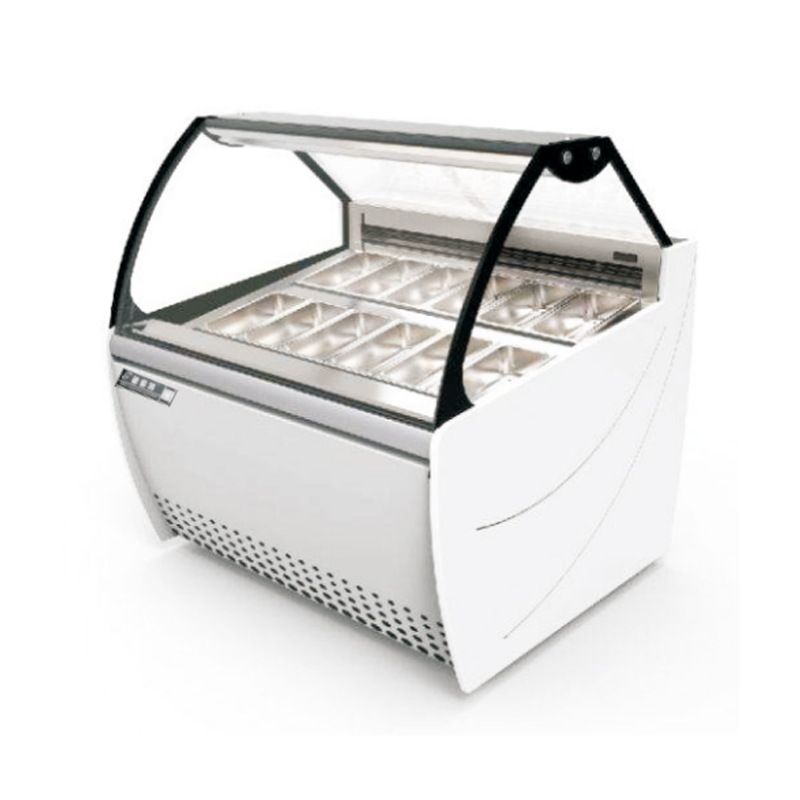
Where a convenience store display freezer is positioned within the store layout has a direct impact on how much it sells. Placement decisions interact with customer traffic flow, product category adjacencies, and the store's overall merchandising strategy in ways that can significantly increase or decrease impulse purchase rates from frozen categories.
Upright display freezers positioned along the main customer traffic path — typically the perimeter wall route that customers naturally follow in a convenience store — maximize the number of customer passes in front of the freezer per hour. Every customer who passes in front of a well-lit, clearly visible glass door freezer is a potential impulse purchaser. Freezers positioned in low-traffic dead-end aisles or tucked behind columns sell significantly less than the same unit on a main traffic route, regardless of what is inside them. The interior rear wall of the store — often called the power wall in retail — is a particularly high-traffic location because customers walking toward the back of the store must pass the freezer units on both the outbound and return journey, doubling exposure time compared to a mid-store position.
Positioning frozen display freezers adjacent to complementary product categories increases cross-category impulse purchases that each category individually would not generate. Ice cream and frozen desserts perform better when positioned adjacent to confectionery, beverages, or snack categories — customers already in a treat-purchase mindset are more likely to consider frozen impulse products. Frozen meals and ready-to-eat frozen food display units perform better near the beverage and alcohol sections, where customers purchasing evening drinks are also in a mindset to consider easy meal solutions. Frozen breakfast items — waffles, burritos, breakfast sandwiches — placed near the coffee station align with the morning mission shopping behavior of convenience store customers stopping for a hot drink.
The ambient temperature immediately surrounding a convenience store display freezer has a significant impact on its energy consumption, compressor life, and temperature maintenance capability. Position display freezers away from heat-generating equipment — hot food display cases, coffee machines, heated snack units — and avoid placing them in locations with direct sunlight exposure through windows or skylights. A freezer unit next to a hot food station can experience ambient temperatures 5–10°C higher than the general store ambient, requiring the compressor to work significantly harder to maintain the target internal temperature. This localized heat exposure accelerates compressor wear, increases electricity consumption, and in worst cases causes temperature compliance failures during peak periods when both the heat source and customer traffic are at their maximum.
The physical quality and temperature performance of the display freezer creates the opportunity for sales — but how products are merchandised within that freezer determines how effectively that opportunity is converted. Thoughtful in-freezer merchandising consistently lifts frozen category sales without any additional product or promotional investment.
Frozen food products stored in convenience store display freezers must be maintained at -18°C or below at all times to comply with food safety regulations in most markets. Temperature compliance is not just a regulatory requirement — it is the mechanism by which the store protects its customers from the food safety risks associated with thawed and refrozen products, and it protects the business from the reputational and legal consequences of selling deteriorated frozen food.
The most common cause of temperature compliance failures in retail display freezers is not equipment malfunction — it is operational practices that consistently expose the cabinet to excessive heat load. Loading the freezer with products that are not already frozen solid — even partially thawed products from a warm delivery — causes the cabinet temperature to rise above the safe limit during the pull-down period. Overstocking the freezer above its rated capacity obstructs the internal airflow that the refrigeration system relies on to distribute cold air evenly, creating warm spots where product temperature exceeds the safe limit even when the display temperature reads correctly. Defrost cycles that are not correctly timed — occurring during peak traffic periods when door openings are most frequent — allow temperature spikes to occur at the worst possible time.
Temperature monitoring and logging is a regulatory requirement for frozen food storage in many jurisdictions and a best practice universally. Modern convenience store display freezers increasingly include integrated digital temperature displays with data logging capability that records temperature readings continuously and can generate automated alerts when the temperature deviates from the set range. For multi-unit stores and franchised convenience retail networks, remote temperature monitoring systems that transmit real-time data to a central management platform allow temperature compliance across all store locations to be monitored without requiring manual logging at each individual unit. These systems pay for themselves quickly through the prevention of food losses from undetected temperature failures and the elimination of manual logging labor.
Display freezers are the largest single category of energy consumer in a typical convenience store, often accounting for 40–60% of total electricity consumption. Managing freezer energy consumption effectively is therefore one of the highest-impact opportunities for reducing store operating costs, and the investment in energy-efficient equipment and practices pays back reliably and measurably.
Insulated night blinds — fabric or rigid panel curtains that roll down in front of open-front display cases or across the glass doors of upright freezers during closed hours — can reduce a display freezer's overnight energy consumption by 30–40% by significantly reducing the heat ingress that the refrigeration system must compensate for. For stores that close overnight, programming the night blind deployment automatically at closing time ensures the energy saving is captured consistently without relying on staff remembering to deploy the blinds at the end of every shift. For 24-hour convenience stores, night blinds can still provide energy savings during low-traffic overnight periods when the visual display function is less critical.
Interior freezer lighting in older display units is commonly fluorescent tube lighting, which generates significant heat inside the cabinet that the refrigeration system must remove — directly increasing energy consumption. Retrofitting LED lighting strips in existing display freezers reduces interior lighting energy consumption by 50–70% and also reduces the heat load inside the cabinet, improving temperature stability and reducing compressor cycling frequency. LED lighting provides better color rendering than fluorescent alternatives, making products appear more visually appealing — particularly for multi-colored packaging that relies on accurate color rendering to communicate product identity. Most display freezer LED retrofit kits pay back through energy savings within 12–18 months of installation.
Automatic defrost systems in convenience store display freezers consume significant energy during each defrost cycle and temporarily raise the cabinet temperature. The default factory defrost cycle settings — typically two to four defrosts per 24-hour period — are conservative settings designed to work in all operating conditions, but many installations can operate with fewer, shorter defrost cycles without ice accumulation problems. Reducing the defrost frequency to the minimum that maintains frost-free operation — typically determined by monitoring the evaporator coil condition over several days — can reduce defrost-related energy consumption and the associated temperature fluctuations significantly. Schedule defrost cycles to occur during overnight low-traffic periods rather than during peak store hours to minimize the impact on product temperatures and customer-facing freezer performance.
Consistent, scheduled maintenance prevents the vast majority of display freezer failures and performance problems before they develop into costly breakdowns or food safety incidents. In a convenience store context where staff resources are limited, building maintenance tasks into the daily operating routine ensures they happen reliably without requiring a separate maintenance management system.
Purchasing display freezers for a convenience store is a capital investment that will affect daily operations, electricity bills, and frozen product sales for ten years or more. Applying a structured evaluation approach rather than selecting on price alone produces significantly better long-term outcomes.
Start by defining the total net display volume needed based on the frozen product range the store intends to carry, the minimum facing count per product, and the shelf depth required for the product formats in the range. Convert this into a number of door sections or freezer units and establish the floor area budget available for the installation. Then evaluate units against the technical specification requirements — ambient temperature rating, glass door specification, defrost system, refrigerant type, and energy consumption — before comparing prices. A unit that meets all specification requirements at a higher price will almost always deliver lower total cost of ownership than a cheaper unit that doesn't, once energy costs, maintenance frequency, and service life are factored in.
Verify that the supplier provides adequate after-sales support — spare parts availability, service engineer coverage in the store's location, and warranty terms that are commercially meaningful rather than heavily caveated. A three-year parts and labor warranty with a named local service provider is worth significantly more than a five-year warranty from an overseas manufacturer with no local service network. Request the names and contact details of existing retail customers using the same unit models and speak with them directly about their experience with performance, energy consumption, and after-sales service before making a final purchasing decision.

No.8 Xinhua Road, Dianshanhu Town, Kunshan City, Suzhou, Jiangsu Province, China
Call Us: +86-18217685733 / +86-18221531811
E-mail: [email protected] / [email protected]
Copyright © Jiangsu Bingluo Refrigeration Equipment Co., Ltd. All Rights Reserved. Commercial Refrigeration Equipment Solutions