 English
 русский
 Español
 عربى
عربىIndustry News
Home / News / Industry News / Commercial Refrigerators: Complete Buyer's Guide to Types, Specifications, and Maintenance
2026-03-18
Content
Commercial refrigerators are heavy-duty refrigeration units engineered specifically for foodservice, retail, hospitality, and food processing environments where continuous operation, high product throughput, and compliance with food safety regulations are non-negotiable requirements. Unlike residential refrigerators — which are designed for intermittent household use with moderate temperature stability requirements — commercial refrigeration equipment is built to maintain precise temperature ranges continuously despite frequent door openings, high ambient kitchen temperatures, large product loads, and demanding 24/7 operating cycles that would rapidly overwhelm a domestic appliance.
The fundamental engineering differences between commercial and residential refrigerators reflect these demands. Commercial units feature more powerful compressor systems — often remotely located to reduce heat load in the working environment — along with thicker insulation panels, heavier-gauge stainless steel exterior and interior construction, reinforced door hinges and seals rated for thousands of daily cycles, and refrigeration systems calibrated to recover rapidly to set temperature after door opening. The electrical systems of commercial refrigerators are designed for continuous operation at high duty cycles without the thermal cycling limitations that affect residential compressors. These engineering differences translate directly into higher capital cost but also significantly longer service life — typically 10–20 years for well-maintained commercial refrigeration equipment versus 7–12 years for residential units.
The commercial refrigerator category encompasses a wide range of equipment types, each optimized for specific storage, display, or production applications across different commercial environments. Selecting the right type for a given application directly impacts operational efficiency, food safety compliance, energy consumption, and the economics of the food business.
Reach-in refrigerators are the most common type of commercial refrigeration equipment in professional kitchens, representing the backbone of back-of-house food storage in restaurants, hotels, catering operations, and institutional food service. Available in one, two, and three-section configurations with solid or glass doors, reach-in commercial refrigerators provide organized, easily accessible storage for prepared ingredients, raw proteins, dairy products, and beverages. Standard reach-in units maintain temperature ranges of 35–38°F (1.7–3.3°C) and are designed for placement against kitchen walls or in line configurations. The solid door reach-in is the standard workhorse for general ingredient storage, while glass door reach-in refrigerators are used in front-of-house environments, bars, and convenience settings where product visibility drives sales or improves service speed.
Walk-in commercial refrigerators — commonly called walk-in coolers — are large, room-sized refrigerated spaces built from insulated panel systems that allow staff to walk inside to access stored products. They are essential for high-volume food operations including large restaurants, institutional kitchens, food distributors, grocery stores, and food processing facilities that require significantly more refrigerated storage capacity than reach-in units can provide. Walk-in coolers are either pre-fabricated modular systems assembled on-site or custom-constructed to fit specific floor plan dimensions, and can range from small 6×6 foot units to vast multi-thousand square foot refrigerated warehouses. The ability to store product on shelving systems, roll-in racks, and pallet positions makes walk-ins vastly more efficient for bulk storage and large-batch preparation operations than multiple reach-in units would be.
Undercounter refrigerators are compact commercial refrigeration units designed to fit beneath standard 36-inch countertop heights, providing refrigerated storage directly at the workstation where ingredients are needed. This placement eliminates the steps and time required to walk to a reach-in refrigerator for frequently used items, significantly improving prep station efficiency. Undercounter commercial refrigerators are widely used beneath bar counters for beverage storage, at prep stations for sauces, dairy, and mise en place ingredients, and in pizza prep configurations where the top surface doubles as a prep area. Drawer-style undercounter refrigerators — featuring two or three full-width refrigerated drawers instead of hinged doors — are particularly popular at grill stations and prep areas where seamless, one-motion access to ingredients without bending or stepping back from the work surface maximizes operational speed.
Commercial display refrigerators are purpose-built to showcase products to consumers in retail, foodservice, and hospitality environments while maintaining precise food-safe temperatures. They include glass door reach-in merchandising units for beverages and grab-and-go items in convenience stores and cafeterias, open-front multi-deck display cases for dairy, deli, and prepared food retail, refrigerated bakery and patisserie display cases with illuminated glass shelving, and countertop refrigerated display units for impulse-purchase items at checkout or service counters. The design priorities for commercial display refrigerators balance refrigeration performance — maintaining safe product temperatures despite the high heat gain from open fronts or large glass areas — with product presentation quality, energy efficiency, and the ability to maintain consistent product appearance with no condensation on glass surfaces.
Refrigerated prep tables — also called sandwich prep units, pizza prep tables, or salad prep stations — combine a refrigerated undercounter storage area with a refrigerated top rail that holds hotel pans or ingredient containers at the work surface for immediate access during food assembly. These specialized commercial refrigerators are central to the efficiency of high-volume sandwich, pizza, and salad operations where speed of assembly and continuous ingredient access are critical. The top rail maintains ingredients at food-safe temperatures while keeping them instantly accessible without lifting lids or opening doors, dramatically reducing the time required per assembly cycle during peak service periods. Selecting the correct prep table configuration — number of doors, pan capacity, top opening style — requires matching the unit's size to the menu complexity and service volume of the specific operation.
Bar refrigeration includes a specialized category of commercial refrigerators engineered for beverage storage and service environments, including back bar refrigerators, bottle coolers, beer dispensing systems, and wine refrigerators with precise temperature zoning for different wine varietals. Back bar refrigerators with glass doors keep beverages visible and accessible to bartenders while displaying the product range to customers. Keg coolers maintain draft beer at optimal dispensing temperatures while connecting to tap systems. Wine storage refrigerators maintain the 45–65°F (7–18°C) temperature range with high humidity and minimal vibration required for wine preservation. The commercial bar refrigeration category demands equipment that can withstand the high-frequency access, spillage, and cleaning cycles characteristic of busy bar environments while maintaining consistent temperatures throughout service.
Commercial refrigerator specifications directly determine whether a unit will perform reliably in its intended environment, meet applicable food safety standards, and deliver acceptable operating economics over its service life. The following comparison framework covers the most critical parameters for commercial refrigerator selection.
| Specification | Why It Matters | What to Look For |
| Temperature Range and Stability | Determines food safety compliance and product quality maintenance | 33–41°F (0.5–5°C) for most applications; ±1–2°F uniformity |
| Ambient Temperature Rating | Must match actual kitchen or installation environment temperature | Class N (up to 77°F/25°C), Class ST (up to 90°F/32°C), Class T (up to 109°F/43°C) |
| Interior Capacity (cubic feet) | Must accommodate peak storage volume requirements with appropriate margin | Size to 70–80% of maximum capacity to allow air circulation |
| Compressor Location | Top-mount vs bottom-mount affects installation clearance and maintenance access | Top-mount preferred for hot kitchens; bottom-mount for easier servicing |
| Refrigerant Type | Environmental compliance and future serviceability | R-290 (propane), R-404A phase-out; verify local regulations |
| Energy Consumption (kWh/day) | Major component of operating cost over equipment lifetime | ENERGY STAR certified units 20–30% more efficient than standard |
| Door Type and Seal Quality | Determines heat gain from door opening and seal longevity | Self-closing doors; magnetic gaskets; heated door frames for glass doors |
| Interior Construction | Cleanability and corrosion resistance in food service environments | 304 stainless steel interior; smooth coved corners; removable shelves |
| Defrost System | Automatic defrost frequency affects temperature stability and energy use | Auto-defrost with demand-based or timed cycles; hot gas preferred |
| NSF / UL Certification | Required for commercial food service installations in most jurisdictions | NSF/ANSI 7 for commercial refrigerators; UL listing for electrical safety |
Maintaining correct temperatures in commercial refrigeration equipment is not merely a matter of food quality — it is a legal food safety requirement governed by HACCP principles, local health codes, and FDA Food Code regulations in the United States and equivalent regulatory frameworks internationally. Understanding temperature requirements by product category and how commercial refrigerators must be configured to meet them is essential knowledge for any food service operator.
The FDA Food Code requires that potentially hazardous foods — including meats, poultry, seafood, dairy products, cooked foods, and cut produce — be held at 41°F (5°C) or below in refrigerated storage to prevent bacterial growth in the temperature danger zone between 41°F and 135°F (5–57°C). Commercial refrigerators used for food storage must be capable of maintaining 41°F or below under full load conditions and during normal service with typical door opening frequency. Operators are required to monitor refrigerator temperatures with calibrated thermometers and maintain temperature logs for inspection purposes. Health department inspectors routinely check refrigerator temperatures during routine inspections, and units found holding food above 41°F can trigger immediate corrective action requirements and citations.
While 41°F is the maximum allowable temperature for most potentially hazardous foods, many products have optimal storage temperatures below this maximum that maximize quality and shelf life. Operating commercial refrigerators at the appropriate temperature for their primary product category rather than simply at the regulatory maximum significantly reduces spoilage waste and extends product freshness.
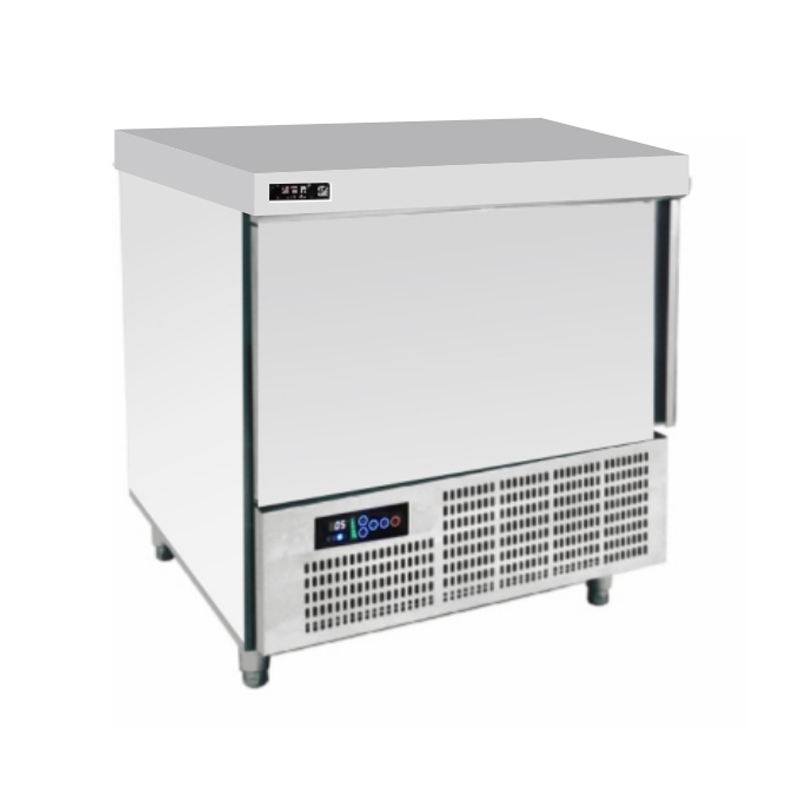
Commercial refrigerators operate continuously — 8,760 hours per year — making energy efficiency one of the most significant factors in the total cost of ownership of commercial refrigeration equipment. A single reach-in commercial refrigerator may consume 3–10 kWh per day depending on size, type, and efficiency rating, translating to $100–$350 per year in electricity costs at average US commercial electricity rates. A restaurant with 6–10 refrigeration units running continuously can spend $600–$3,500 annually on refrigeration energy alone, making energy-efficient equipment selection a meaningful operational cost driver over the 15+ year service life of commercial refrigerators.
The EPA's ENERGY STAR program certifies commercial refrigerators that meet energy efficiency thresholds typically 20–30% more stringent than the federal minimum efficiency standards. ENERGY STAR certified commercial refrigerators achieve these efficiencies through higher-efficiency compressors, improved insulation thickness and quality, LED interior lighting, electronically commutated (EC) motor fan systems, and optimized door seal designs that minimize heat gain from door openings and ambient infiltration. For operations purchasing new commercial refrigerators, specifying ENERGY STAR certified models is one of the highest-return energy efficiency investments available, with typical payback periods of 2–4 years relative to non-certified units of equivalent capacity.
Beyond equipment selection, operational practices in the kitchen and storage areas significantly influence commercial refrigerator energy consumption and performance. Training staff on these practices can reduce refrigeration energy use by 10–20% without any capital investment.
Correct installation of commercial refrigerators is critical to their performance, longevity, and compliance with health codes and equipment warranties. Many commercial refrigerator failures and performance problems — inadequate cooling, excessive energy consumption, premature compressor failure — trace back to improper installation rather than equipment defects. Understanding the key installation requirements before purchasing equipment allows proper site preparation and prevents costly problems after delivery.
Commercial refrigerators have specific electrical requirements that must be met by dedicated circuits installed per local electrical codes. Most reach-in commercial refrigerators operate on 115V/60Hz single-phase power and require a dedicated 15-amp or 20-amp grounded circuit — they should never share a circuit with other high-draw kitchen equipment. Larger commercial refrigeration units — walk-in systems, multiple-section reach-ins, and display cases — may require 208-240V single or three-phase power. Verify the voltage, amperage, and phase requirements of each unit before finalizing the kitchen electrical plan and always use a licensed electrician for commercial kitchen electrical installations. Voltage fluctuations and inadequate power supply are leading causes of commercial refrigerator compressor failure and void most manufacturer warranties.
Commercial refrigerators reject significant heat from their condenser systems — a typical reach-in commercial refrigerator rejects 800–2,000 BTU/hr of heat into the surrounding environment. In enclosed kitchen spaces with multiple refrigeration units, this heat load contributes materially to the ambient temperature that the HVAC system must manage and that the refrigeration units themselves must work against. Top-mount condenser units must have unobstructed clearance above — typically 6–12 inches minimum — for condenser air discharge. Bottom-mount units require clear front air intake space. Recessing commercial refrigerators in enclosed alcoves without adequate ventilation is one of the most common installation errors causing chronic temperature performance problems and shortened compressor life.
Commercial refrigerators must be installed on level, structurally sound flooring capable of supporting the unit's weight — a fully loaded three-section reach-in refrigerator may weigh 500–800 pounds. Leveling is important both for proper door operation — unlevel installation causes self-closing doors to either fail to close or close too forcefully — and for proper condensate drainage within the unit. Commercial refrigerators produce condensate during the defrost cycle that must drain through a built-in drain port to a floor drain. Ensure that the installation location has access to a floor drain within plumbing connection distance of the unit's drain outlet, or specify units with internal evaporation systems that eliminate the need for external drainage where floor drain access is limited.
A structured preventive maintenance program is the single most effective strategy for maximizing commercial refrigerator service life, maintaining consistent performance, avoiding food safety incidents from refrigeration failure, and reducing emergency repair costs. Commercial refrigeration equipment operated without systematic maintenance typically requires major repairs 2–3 times more frequently than well-maintained equipment and has a significantly shorter service life.
The right commercial refrigerator for a given food business operation depends on a combination of storage volume requirements, product type, available floor space, kitchen layout, budget, and regulatory environment. Working through the following evaluation framework systematically ensures that the selected equipment matches the actual operational needs of the business rather than being over-specified (wasting capital) or under-specified (creating operational bottlenecks and food safety risks).

No.8 Xinhua Road, Dianshanhu Town, Kunshan City, Suzhou, Jiangsu Province, China
Call Us: +86-18217685733 / +86-18221531811
E-mail: [email protected] / [email protected]
Copyright © Jiangsu Bingluo Refrigeration Equipment Co., Ltd. All Rights Reserved. Commercial Refrigeration Equipment Solutions