 English
 русский
 Español
 عربى
Industry News
Home / News / Industry News / Cocktail Ice Cube Maker for Bartenders: Practical Applications, Selection, Performance
2026-11-12
Walk into a busy cocktail bar at nine on a Friday and watch the ice wells for a minute. You can usually tell how the night will go. Bars that run short start improvising, and bars with the wrong ice start apologizing. A cocktail ice cube maker for bartenders is not really a luxury purchase. It is the piece of equipment that decides whether your team can pour the drinks on your menu at the pace your guests expect.
We have spent years building commercial ice and refrigeration equipment, and the most useful conversations we have with bar owners rarely start with output figures. They start with the drinks list. Once you know what you are serving, the right machine tends to become fairly obvious.
Content
Bartenders talk about dilution the way cooks talk about salt. A little is structure; too much is a ruined drink. Ice is the main control you have over that balance. A dense, cold cube chills a cocktail quickly and then melts slowly, so the drink opens up instead of turning watery within five minutes.
The opposite is just as true. Bagged ice that has been sitting in a warm storeroom arrives wet, soft, and already half melted. It chills slowly, dilutes early, and leaves the glass looking tired. If your bar is buying ice by the bag during service, you are paying a premium for the least consistent version of an ingredient you use in almost every glass.
Producing your own ice gives you three practical things: a consistent shape, a predictable temperature, and enough volume at peak hours. Those three things are worth more than any single specification on a sales sheet.
Ice is not one product. The shape decides how fast a drink chills, how quickly it dilutes, and how the glass reads to a guest. Most bars end up with two styles: a workhorse cube for the well and a slower-melting format for spirit-forward drinks.
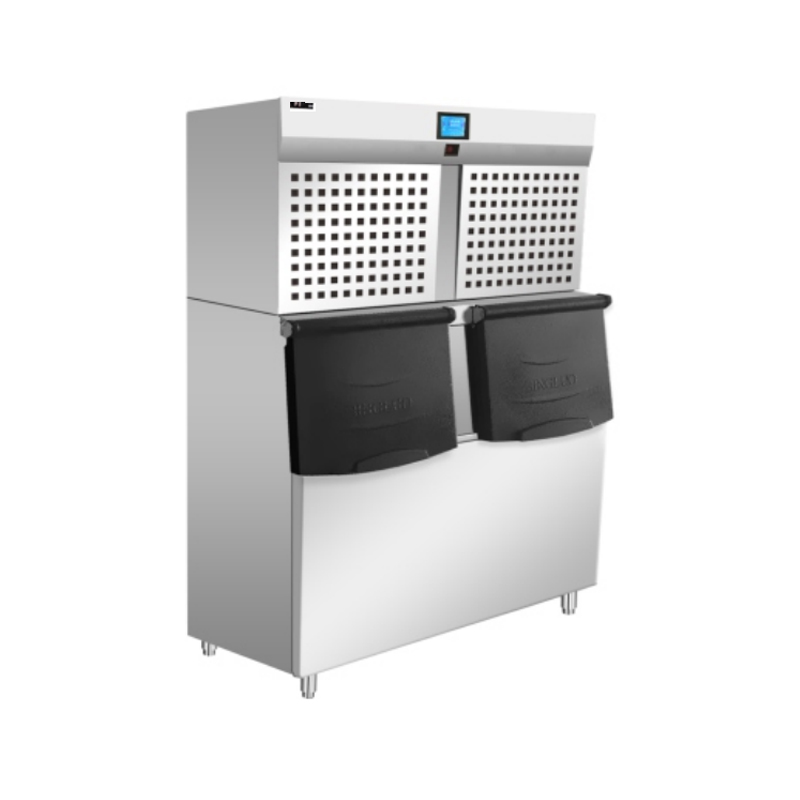
A standard square cube is the reliable all-rounder. It chills fast, packs neatly into a shaker or a highball, and suits the kind of volume that keeps a service bar moving. Most of the drinks on a typical list — sours, highballs, spritzes, iced coffee — are perfectly happy with a well-made square cube.
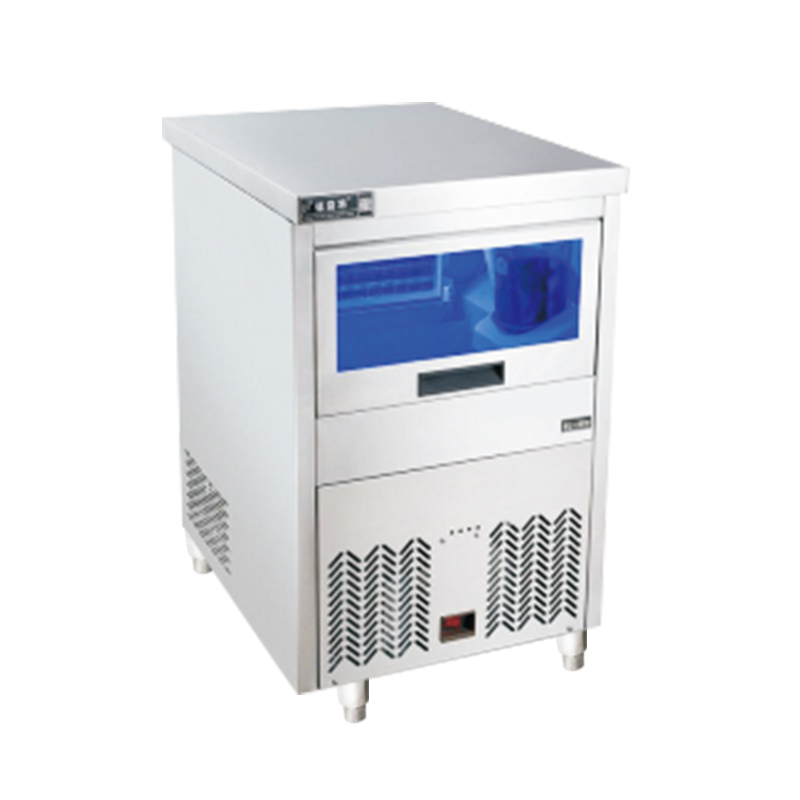
 Commercial Square Cube Ice MachinesDesigned for fast-chilling everyday drinks, this commercial square-cube range suits bars and cafés needing reliable volume, adjustable thickness, and models from compact to high-capacity.View Product →
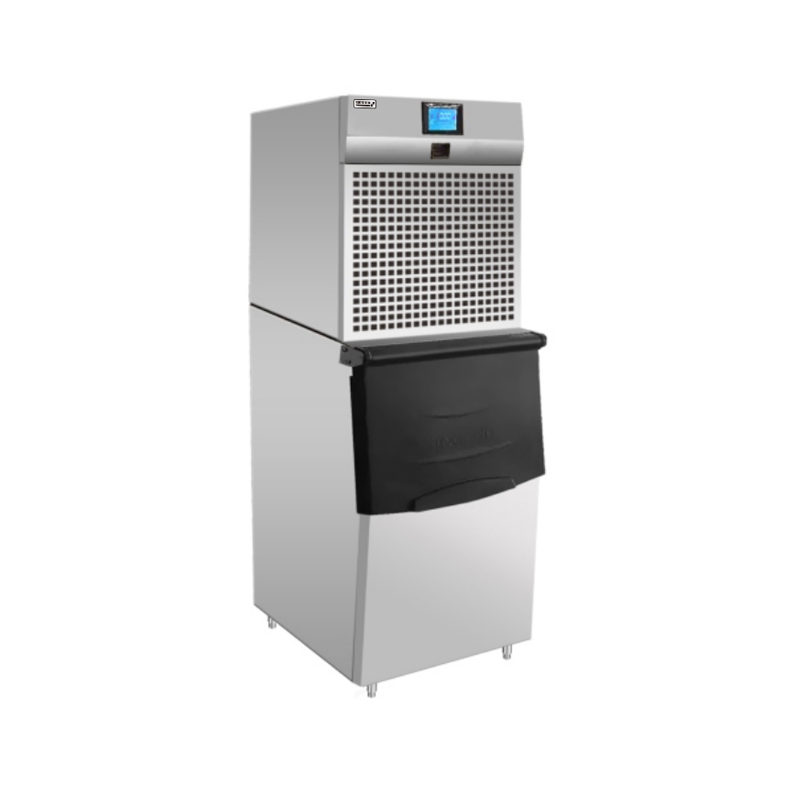
Large and jumbo cubes are a different tool. They melt slowly and look deliberate in a rocks glass, which is why they suit an Old Fashioned, a Negroni, or a neat pour served on the side. Crescent ice sits somewhere in between: curved, slightly softer in appearance, and easy to pack into a glass, which makes it a friendly option for long drinks and high-volume service.
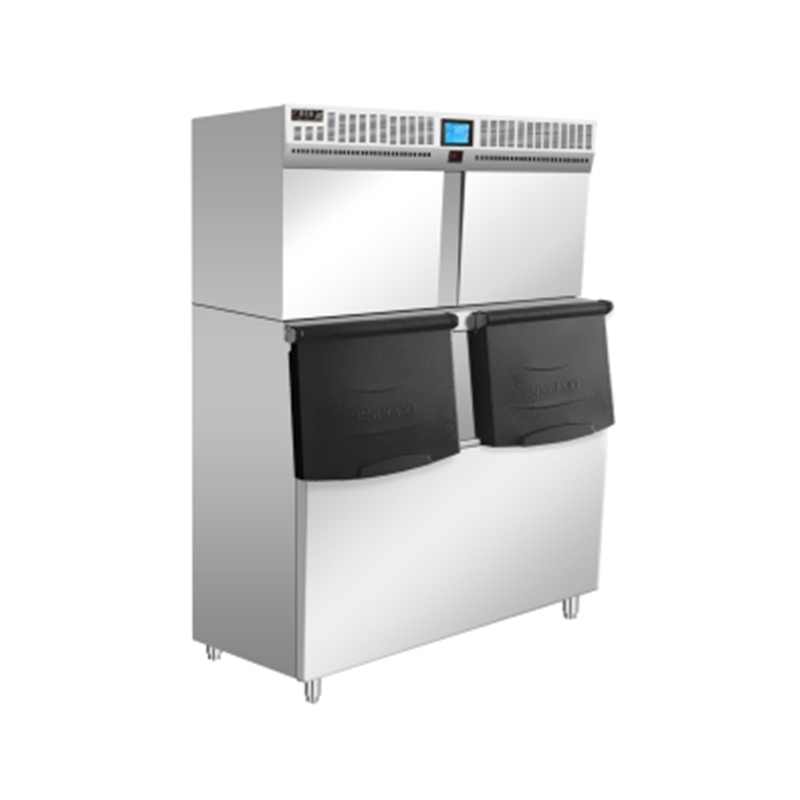
 Commercial Crescent Shaped Ice MakersProduces clear crescent ice for long drinks and high-volume service, with automatic controls, stainless-steel freezing plates, and capacities from small cafés to larger operations.View Product →
Clear ice is its own category. A transparent cube signals care before the guest tastes anything, and it usually points to a slower, more controlled freezing process. If clear ice is part of your identity, it is worth reading a practical guide to square ice selection for bars and restaurants before you commit to a machine style.
| Ice style | Character in the glass | Where it earns its place |
|---|---|---|
| Standard square cube | Dense, fast-chilling, predictable melt | Shaken classics, highballs, busy service wells |
| Large or jumbo cube | Slow melt, strong visual presence | Spirit-forward cocktails, whiskey service, tasting menus |
| Crescent ice | Curved, packs well, moderate melt | Long drinks, iced coffee, all-round bar service |
| Clear square cube | Transparent, premium presentation | Signature drinks and bars where the glass is part of the show |
| Flake or snow ice | Soft, high surface area, very fast chilling | Blended and frozen drinks, display beds, rapid chilling |
Headline daily output is measured under test conditions. Real output drops when the room is hot, the water is warm, and the machine is working through a full bin in the middle of a rush. So the useful question is not "how big is this machine?" but "how much ice do we actually move on our busiest night?"
A common starting point in planning is roughly 1.5 to 3 pounds of ice per guest, adjusted for climate, glassware, and how much your guests order. A compact bar with 60 covers and a tight cocktail list sits at the low end. A warm-weather venue with a patio, long drinks, and a busy brunch sits at the high end.
These are two separate numbers, and bars often confuse them. Production is how much ice the machine makes in 24 hours; storage is how much the bin holds. A machine that produces plenty of ice but stores very little will need to run almost continuously during service. If your bar has a late rush, extra bin capacity is often more valuable than a larger compressor.
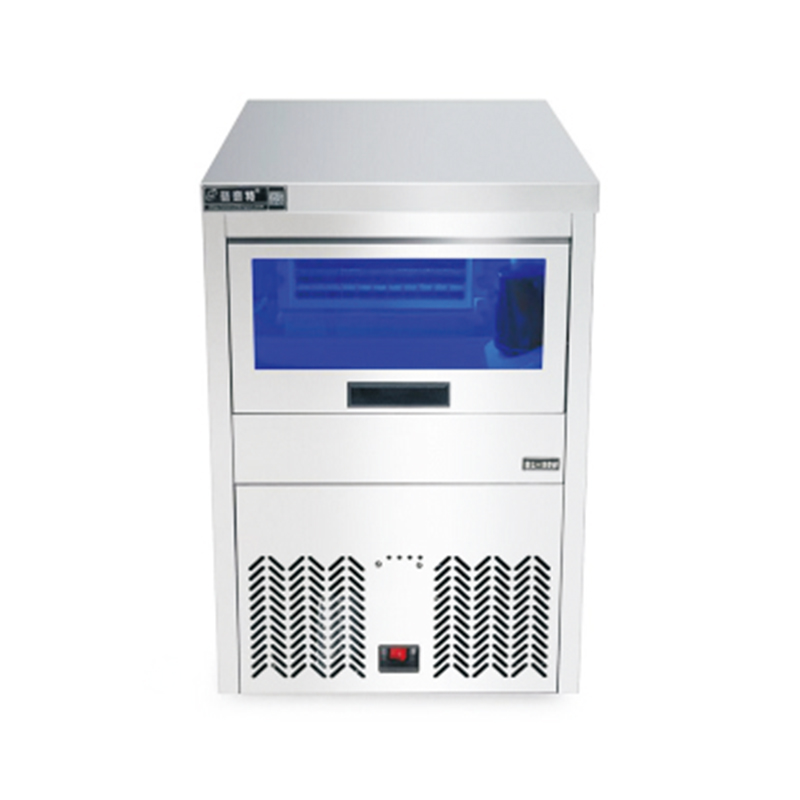
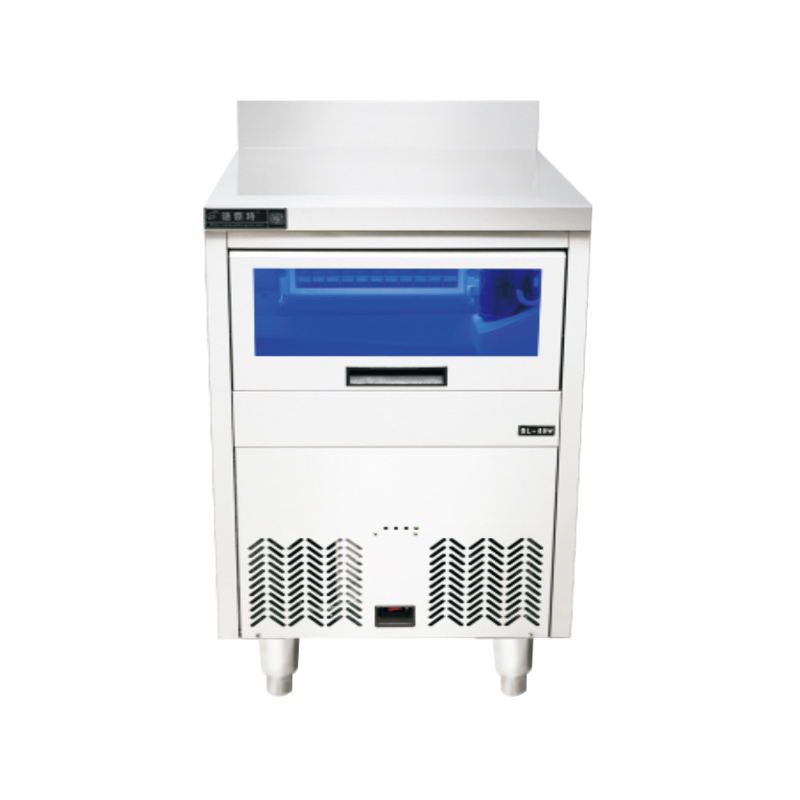
An undercounter unit fits neatly below the bar top and keeps the walk to the well short, which matters when a bartender is making twelve drinks a minute. A modular machine, usually paired with a separate storage bin, is better suited to a back-of-house ice room or a larger venue where ice is carried to several bars. Neither is universally better; they solve different floor plans.
Cloudy ice is usually a story about freezing speed and water quality. When water freezes quickly from all directions, dissolved air and minerals get trapped in the middle of the cube. Clear ice tends to come from slower, more directional freezing, often with moving water or a spray system that keeps the freeze even and pushes impurities away from the finished block.
Water treatment matters as much as the machine. Fine filtration and a sensible approach to hardness keep scale down and help the ice release cleanly. If your water is particularly hard, a filter change schedule is not a suggestion — it is the difference between a clear cube and a cloudy one.
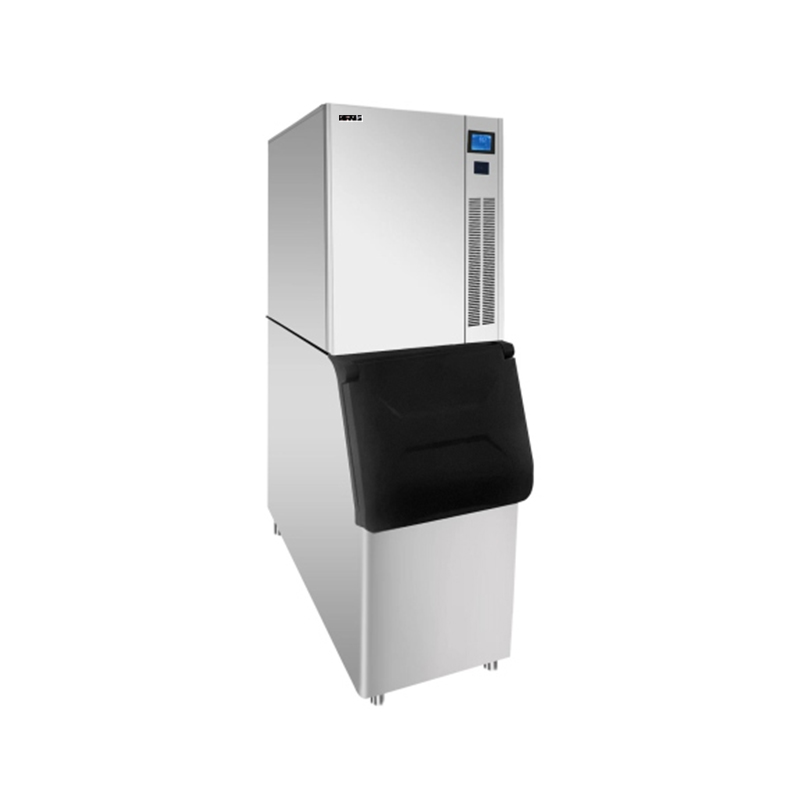
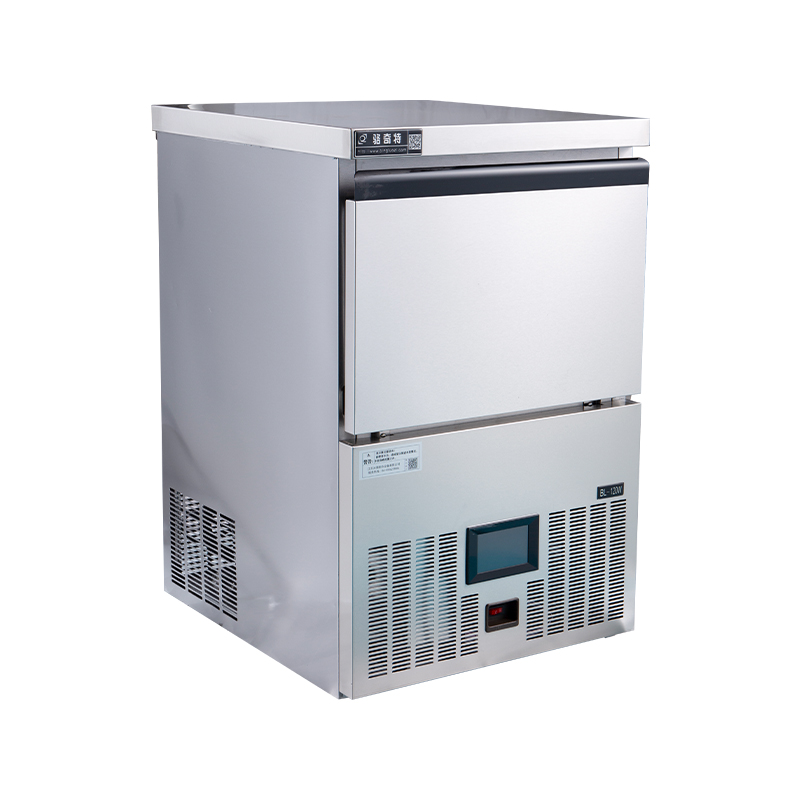 Jumbo Square Cube Ice MachinesMakes crystal-clear, slow-melt 30mm and 50mm cubes for premium cocktails and whisky service, with precision molds, stainless-steel construction, and quiet operation.View Product →
For bars where the visual finish is central to the concept, a large clear cube is worth planning around: slower production, more careful handling, and a storage routine that keeps the cubes from sticking together. It is more work than a standard cube, but it is also the kind of detail guests notice without being told to.
An ice machine is a refrigeration unit, so it needs to breathe. Air-cooled models reject heat into the room, which is fine in a well-ventilated back bar and less fine in a small, warm alcove beside an oven. Water-cooled models handle heat better but need a reliable water supply and drainage. Whichever route you choose, the installation details decide how close the machine gets to its rated output.
Most ice complaints we hear are not failures. They are maintenance drift: a scale-coated evaporator, a clogged filter, a bin that has not been sanitized since the last menu change. A short routine protects both the machine and the flavor of your drinks.
If you want a deeper routine, our team has written a separate guide on how often to clean an ice maker that fits a busy bar schedule.
The machine is only one part of the picture. Ice wells, a dump sink within reach, speed rails, and a work surface at the right height all shape how fast a bartender can move. In a new build or a refit, it is worth planning the ice station and the bar top together rather than fitting the ice machine into whatever space is left.
For venues that need the whole station coordinated, we offer customized bar equipment solutions, including stainless steel bar counters and water bar setups. We have been manufacturing commercial refrigeration equipment since 2006, and our production base in Jiangsu handles both standard machines and project work, so an ice machine and the bar around it can be specified as one package.
Choosing a cocktail ice cube maker for bartenders is a smaller decision than it first appears, as long as you start from the drinks. Shape, clarity, and service speed tell you more about the right machine than a long specification sheet. Get those three right and the rest — venting, cleaning, bin size — becomes a straightforward installation conversation.
If you are planning a new bar or replacing an aging machine, tell us what you pour and how many guests you serve on your busiest night. We will help you narrow it down from there.

No.8 Xinhua Road, Dianshanhu Town, Kunshan City, Suzhou, Jiangsu Province, China
Call Us: +86-18217685733 / +86-18221531811
E-mail: [email protected] / [email protected]
Copyright © Jiangsu Bingluo Refrigeration Equipment Co., Ltd. All Rights Reserved. Commercial Refrigeration Equipment Solutions