 English
 русский
 Español
 عربى
عربىIndustry News
Home / News / Industry News / Square Ice Maker Machine Buying Guide for Commercial Bars, Restaurants & Cafe
2026-09-08
If you run a bar, cafe, or restaurant, the number of ice cubes you need each day is a practical question, not an abstract one. Square ice melts more slowly than small cubes, so your drinks stay cold without turning watery too quickly, and the visual clarity of the ice becomes part of the serve itself. The conclusion we have reached after working with commercial kitchens is simple: the right square ice maker machine is not the largest unit you can afford, but the one that matches daily output, cube clarity, cooling method, and installation space to your actual operation.
Content
Square ice is usually a full cube or large cube shape, often around 20 to 30 mm on each side. Because of its lower surface area relative to volume, it absorbs less heat and melts slower than crushed or small crescent ice. In a cocktail, a large square cube keeps the drink chilled while preserving the balance of the recipe. In a glass of iced coffee or juice, it dilutes the flavour much more slowly. For venues that care about consistency, this is not a small detail.
Square ice also affects your ice cost. Slower melting means you use less ice in each serve, so the daily load on the machine drops. Many operators choose a square ice maker precisely to control margins without sacrificing the guest experience. The trade-off is that square ice requires a longer freezing cycle and a more precise evaporation surface to form clear, dense cubes.
Before you compare different machines, set your minimum requirements. The table below shows the main specifications that matter in a commercial environment.
| Specification | What to check | Typical impact |
|---|---|---|
| Daily output | kg per 24 hours at 25°C ambient water | Determines whether you can cover peak demand without a second machine |
| Storage capacity | kg inside the bin | Reduces the number of trips to the ice bin during service |
| Cooling method | Air-cooled or water-cooled condenser | Affects heat rejection, water consumption, and installation cost |
| Evaporator design | Spray type, water recycling, or direct freeze | Influences cube clarity, freeze speed, and maintenance frequency |
| Construction | 201 or 304 stainless steel | Affects rust resistance, cleaning ease, and equipment life |
The most common mistake is to look at the label “square ice” and assume all machines are the same. In reality, daily output can vary from under 40 kg to over 200 kg, and the cabinet size may differ by more than double. If you have limited undercounter space, you may need to choose a compact model and accept a lower daily output, then plan the peak-hour ice supply ahead of time.
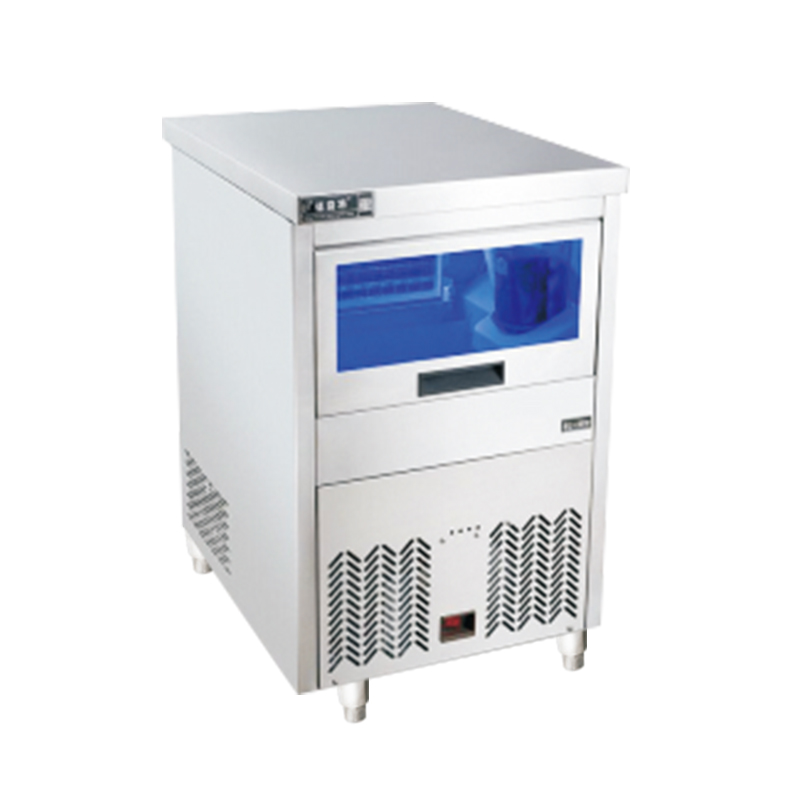
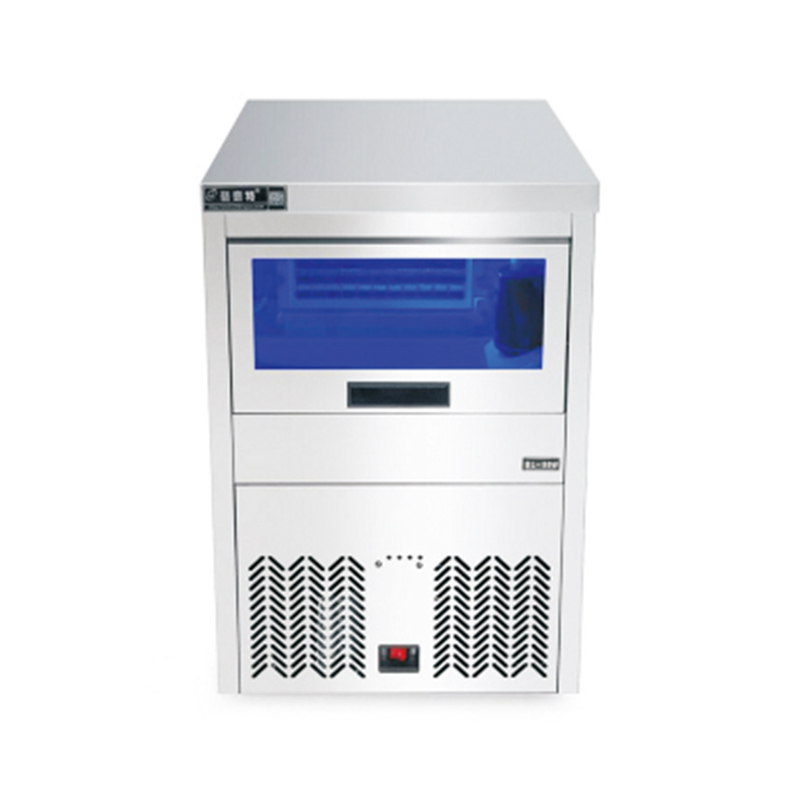 Square Cube Ice Machine with Smart LCD and Auto CleaningThis compact air-cooled unit offers a smart LCD panel, one-button auto cleaning, and blue light sterilization. Its adjustable ice thickness and corrosion-resistant evaporator suit kitchens with limited space where ambient temperature may vary.View Product →
For most restaurants and bars with a compact kitchen, an air-cooled unit is the default choice. It blows hot air from the side or back, uses no water for the condenser, and installs quickly. The downside is that the ambient temperature in the room can affect production. A square ice maker rated at 100 kg per day is usually tested in a 25°C room and 25°C water. If your kitchen is closer to 40°C, you should expect a noticeable output reduction. That is not a defect; it is an operating parameter you must plan for.
Water-cooled units reject heat through a condenser that uses a constant water flow. They are more consistent in hot environments and often used in large or poorly ventilated spaces. The trade-off is higher water usage and the need for a drainage or water recirculation setup. Most buyers can avoid water-cooled machines unless they operate in a hot climate or a sealed room. For installation, it is worth reviewing commercial ice machine installation requirements before placing an order.
Even a well-rated ice maker can fail in the first year if the location is wrong. These are the factors that create the most costly problems.
Water quality is not a minor detail. If your water supply is hard, you should invest in a water softener or a filter with anti-scale media. Scale deposits on the evaporator make it harder for the ice to release, so your cycle time gets longer and your daily output falls. A simple water test at the installation site can reveal whether a square ice maker requires pre-treatment.
A square ice maker works best when it is treated as a food-contact device, not a simple machine. Start each service period by inspecting the ice bin: remove old ice, wipe the bin with a food-grade sanitizer, and check that the water curtain or spray arms are not blocked. Schedule a full descaling and sanitizing at least once every four to six weeks, depending on water hardness.
Clear square ice depends on clean, mineral-balanced water. If you notice cloudy cubes or a slushy texture, check the water filter and clean the evaporator. A common cause of slow ice production is a light layer of scale that is invisible to the eye but enough to insulate the freezing surface. Daily cleaning sounds tedious, but it protects the compressor and keeps your ice at the consistency your menu requires.
The most reliable way to size a square ice maker is to estimate your daily ice demand from menu items. The table below gives a starting point for common business types.
| Business type | Typical daily demand | Recommended machine output |
|---|---|---|
| Coffee shop or juice bar | 20–40 kg | 30–60 kg per day |
| Small bar | 40–80 kg | 50–100 kg per day |
| Restaurant | 60–120 kg | 80–150 kg per day |
| Hotel or banquet kitchen | 100–250 kg | 150–300 kg per day |
These numbers assume normal ambient conditions and no seasonal spikes. If you run a terrace bar in summer or a large event space, multiply the lower end by 1.5. It is safer to have extra capacity than to run out of ice during a peak service time, but it is also smarter to avoid a machine that is far too big and continuously cycles for no reason.
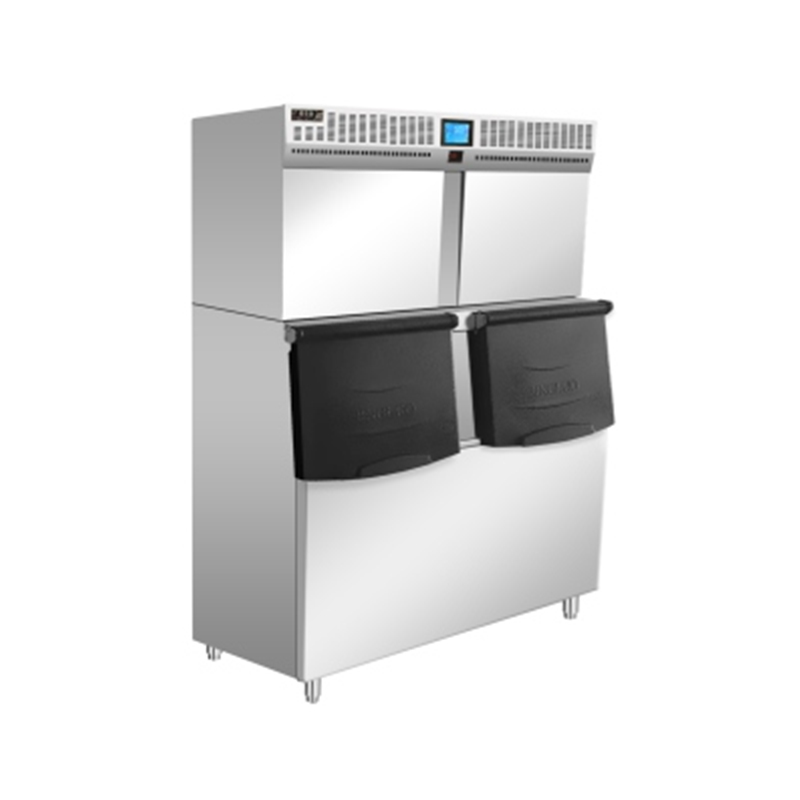
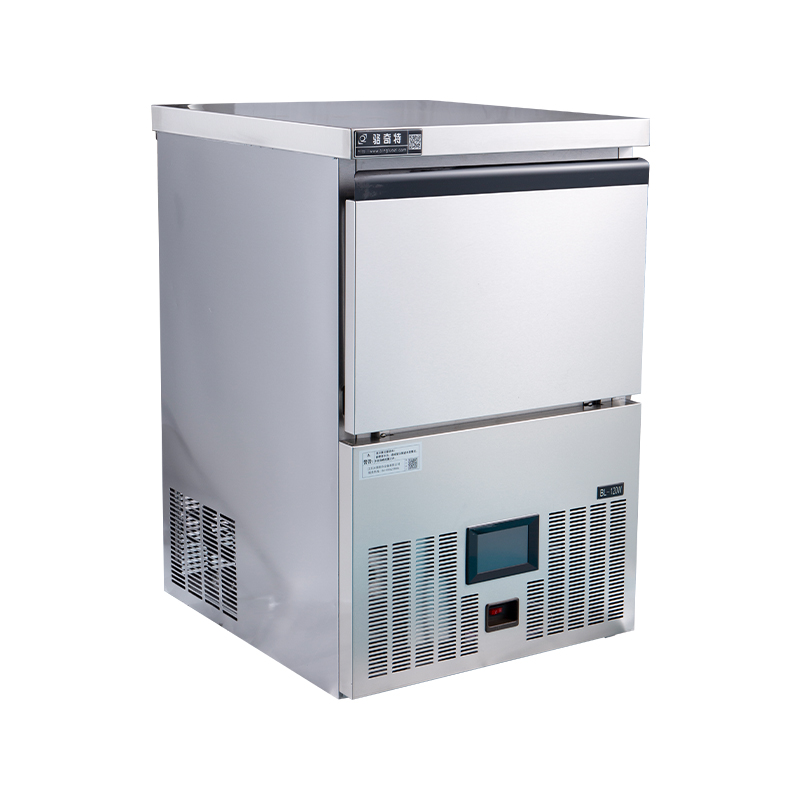 Jumbo Square Cube Ice Machine for Premium Beverage ServiceProduces crystal-clear 30x30x30mm or 50x50x50mm slow-melt cubes with a whisper-quiet compressor. Stainless steel construction and HACCP hygiene features make it ideal for high-end bars and hotels.View Product →
In a commercial kitchen, stainless steel is not a cosmetic choice. It protects the internal components from humidity, salt, and cleaning chemicals. On the exterior, a 304 grade offers better corrosion resistance than 201, especially near the sea or in coastal towns. On the interior, look for a seamless or well-welded ice bin with rounded corners, because food residue collects in sharp angles and is harder to clean.
There is also a practical difference in how the frame is assembled. A machine with a galvanized or painted back panel may serve you for years in a dry, clean room, but the same unit in a humid bar area will develop rust spots sooner. If the price difference between a 201 and 304 model is small, choose 304. If you are operating in a highly corrosive environment, the extra cost of 304 is often the cheapest insurance you can buy.
Start with a simple calculation: count the number of drinks or portions that need ice per hour, multiply by the average ice weight per serve, and add a peak factor. For square ice, plan for 20 to 30 grams per cocktail or mixed drink. If your peak service lasts three hours and you serve 80 drinks per hour, you need roughly 4.8 to 7.2 kg of ice for that period alone, plus bin storage to ride out the rush.
After you know the daily output, match the cooling method to the room temperature and available ventilation. Then compare the physical footprint against your undercounter space. A clear spray-type evaporator usually produces more transparent cubes, while a direct-freeze square ice maker is simpler to maintain in challenging water conditions. If you want to see our full range, you can explore the ice maker series and compare actual dimensions and capacities.
When you have narrowed the choice, look for a manufacturer that offers a clean stainless steel build, a reliable compressor, and a clear support path for installation. Square ice is a niche but growing segment in commercial kitchens, and the right machine can make a visible difference in both drink quality and operating cost.
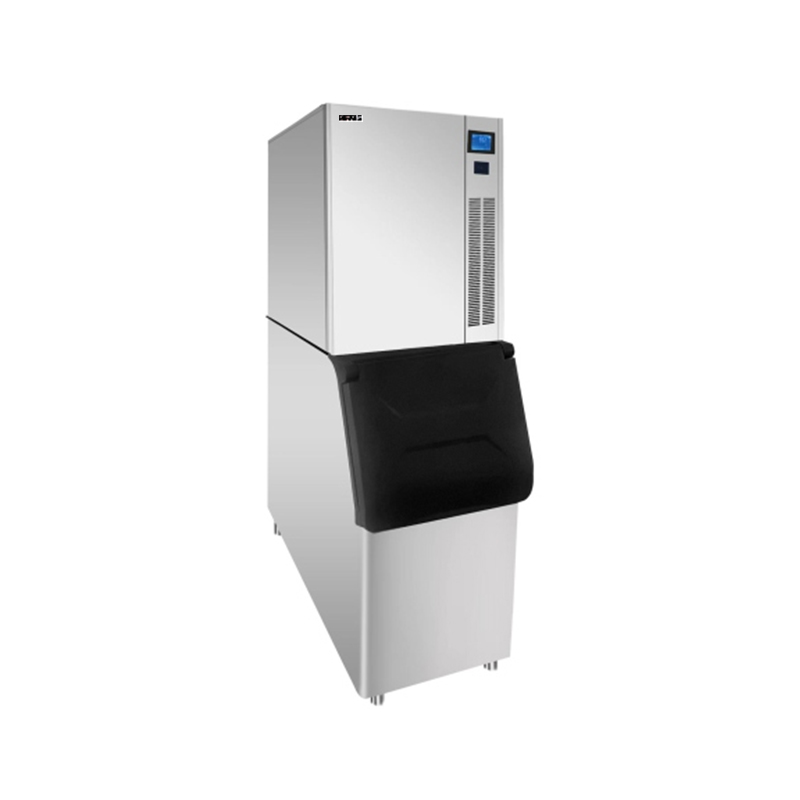
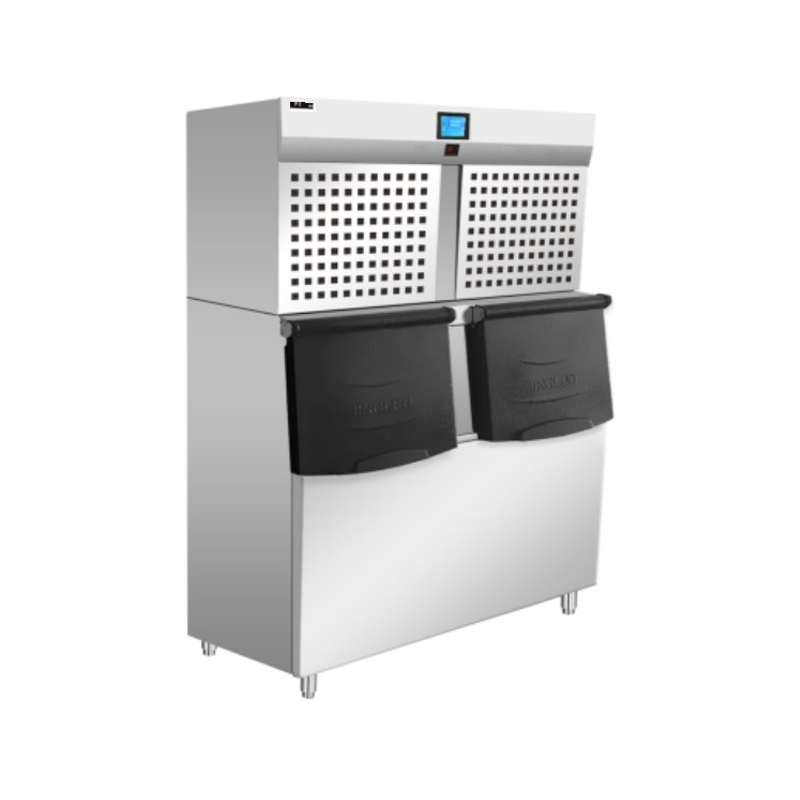
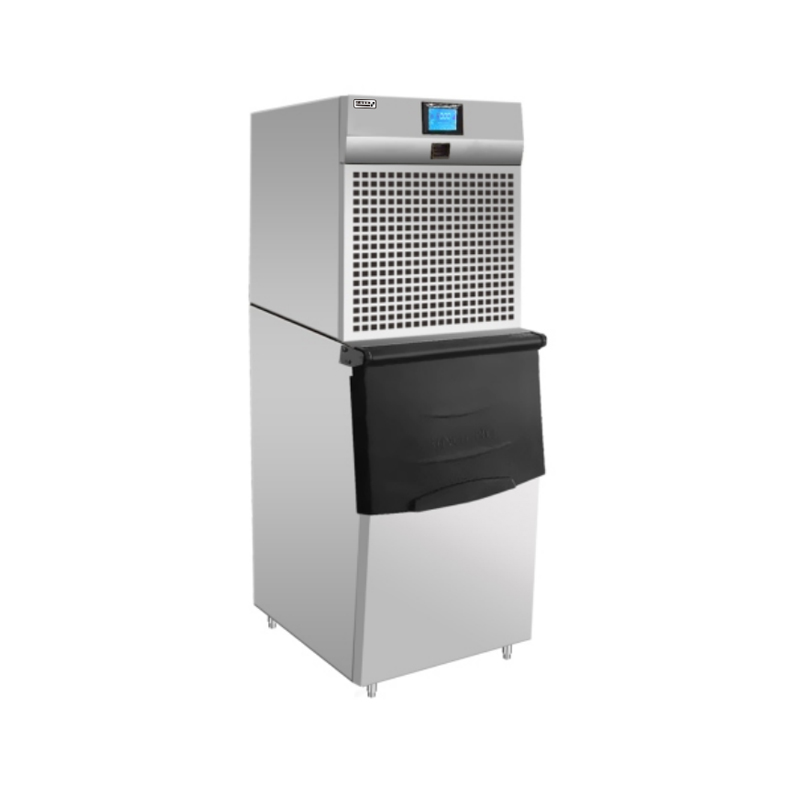
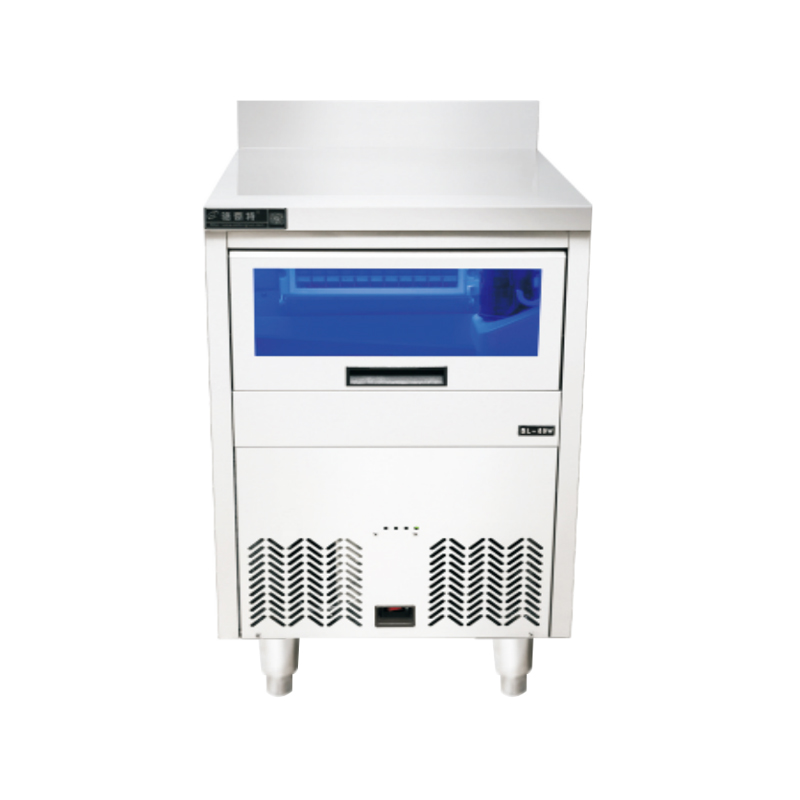 Spray Ice Machine for Clear Square Ice with Low-Temp ProcessUses a -25°C spray-freezing method to create dense, clear square ice with nearly 100% impurity removal. Fully automated control, stainless steel tray, and reliable components ensure consistent output for commercial use.View Product →
No.8 Xinhua Road, Dianshanhu Town, Kunshan City, Suzhou, Jiangsu Province, China
Call Us: +86-18217685733 / +86-18221531811
E-mail: [email protected] / [email protected]
Copyright © Jiangsu Bingluo Refrigeration Equipment Co., Ltd. All Rights Reserved. Commercial Refrigeration Equipment Solutions