 English
 русский
 Español
 عربى
Industry News
Home / News / Industry News / Built-In Undercounter Ice Maker Guide: Sizing, Venting, and Installation
2026-10-19
Most equipment decisions in a café, bar, or hotel pantry are made once and then lived with for years. A built-in undercounter ice maker is exactly that kind of purchase. Tucked below the counter, close to where drinks are actually assembled, it works quietly through the busiest two hours of the day and asks for very little in return — provided the sizing and the airflow were right from the start.
We have been manufacturing commercial ice and refrigeration equipment since 2006, and the notes below come from the questions customers ask us most often. They are less about headline specifications and more about the practical details that decide whether an undercounter machine still performs well in year five.
Content
The name describes two things at once. The unit is built in, meaning it is designed to be enclosed by cabinetry rather than rolled out into open floor space. It is also undercounter, so its working height sits below the countertop and the operator reaches down rather than across. For a tight bar island or a compact espresso station, that combination frees up the most expensive square metre in the room.
The engineering difference from a freestanding machine is where the air goes. A true built-in model draws air in and pushes warm air out through a grille at the front, which is what allows it to sit inside a cabinet run. Slide one into a closed box with no return path for that warm air and the compressor spends its working life fighting heat it produced itself. In our experience, more undercounter ice machines are retired early because of poor ventilation than for any other single reason.
Gravity drain relies on a continuous fall to a nearby floor drain, which is simple and dependable but constrains where the machine can go. A built-in drain pump lifts waste water upward, so the unit can sit in an island or a basement-level bar where gravity has nowhere to run. Pumps are reliable, but they are a mechanical part and deserve a place on your maintenance calendar.
Ice is not a commodity. The shape a machine produces affects how quickly a drink dilutes, how a glass looks when it reaches the table, and how comfortably a scoop fills a well during service. Undercounter units are commonly built around four families of ice, and each has a natural home.
| Ice type | Character | Best suited to | Practical note |
|---|---|---|---|
| Clear square cube | Dense, slow melting, visually sharp | Cocktail bars, premium soft drinks | Needs steady water quality to stay clear |
| Standard square cube | All-purpose, good chill, moderate melt | Cafés, restaurants, hotel service | Easiest shape to buy and to store |
| Crescent | Soft edges, nests well in a glass | Iced coffee, juice, high-volume service | Packs densely, so watch bin capacity |
| Flake | Wet, mouldable, chills very fast | Seafood display, salad bars, smoothies | Melts quickly; not for long drinks |
If a single machine has to serve several purposes, a standard cube is usually the safest compromise. If the bar menu is the priority, choose the shape the drinks were designed around and let the kitchen source its flake ice elsewhere.
Published output is normally quoted over 24 hours at moderate room and water temperatures. A warm kitchen in August, a busy lunch, and a lid opened twenty times an hour all reduce what a machine actually delivers. As a working rule, take your realistic peak-day requirement and add twenty to thirty per cent of headroom before you compare models.
Bin capacity matters just as much as production. Too small and staff are scooping from a nearly empty bin at the worst moment; too large and ice sits long enough to clump, which is wasteful and unappetising. A bin that covers one full service period is usually enough for a café, while bars with a short, intense rush often prefer a deeper storage section.
Confirm the internal width, height, and depth of the cabinet opening, then add the door swing, the route the machine will travel to get there, and enough room at the front grille for air to move. A machine that fits the opening but cannot breathe will underperform from day one.
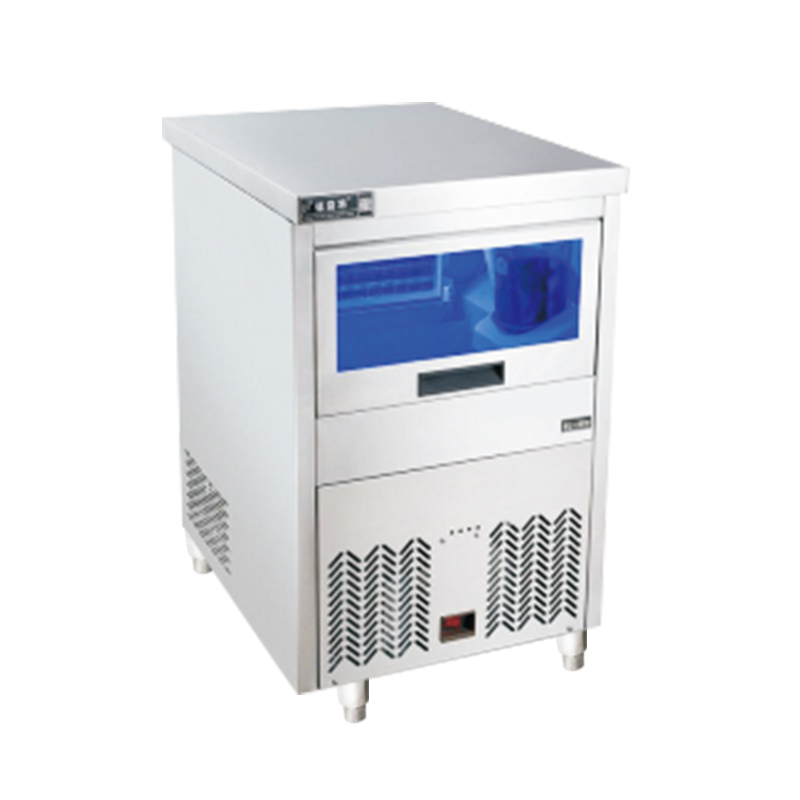 Commercial Undercounter Ice Maker for Cabinet InstallationsA stainless-steel undercounter cube ice maker with self-cleaning and adjustable feet; check cabinet dimensions, airflow, and service access before specifying.View Product →
Three services have to reach the machine, and each one is easy to get slightly wrong.
Placement also deserves a second look: direct sunlight and proximity to ovens or fryers raise the ambient temperature around the cabinet and quietly cut output. If the only available spot is beside a hot line, consider a small extract or at least a gap that lets heat escape. Our commercial ice machine installation requirements walk through the clearance and connection points in more detail.
Ice machines do not usually fail dramatically. They lose performance gradually — a little scale on the evaporator, a film of biofilm in the bin, a condenser coil matted with kitchen grease. The routine below keeps all three in check without consuming much labour.
Ice that tastes of the bin, or cubes that come out cloudy and wet, are usually messages about water and cleaning rather than about the refrigeration circuit.
A counter-height unit beside the espresso machine saves a walk to the back kitchen for every iced latte. Cube or crescent ice both work; what matters is that the bin is reachable without stepping away from the bar.
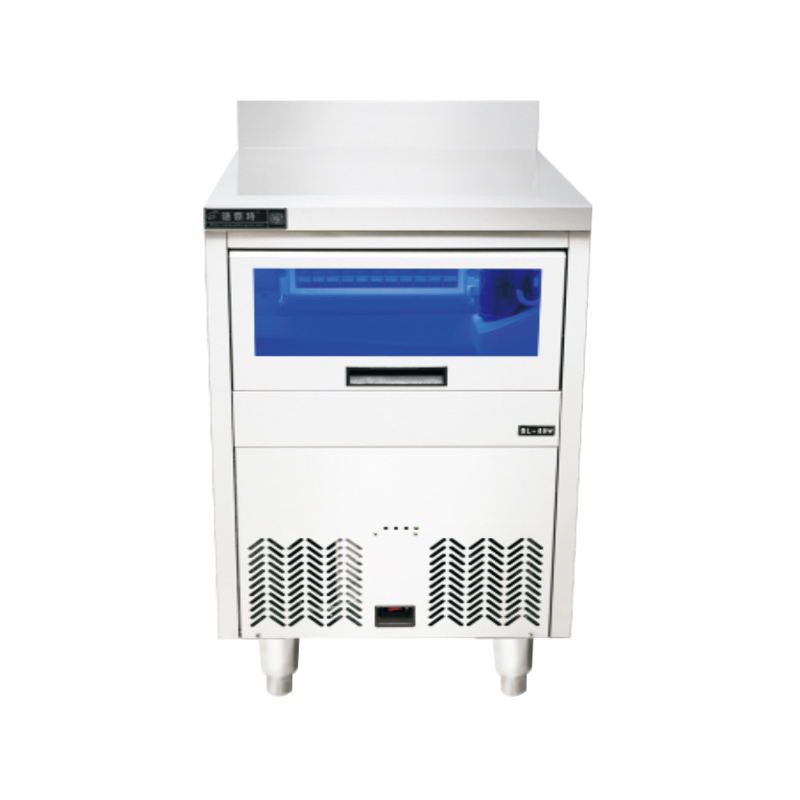 Commercial Crescent Ice Maker for Bars and CafesA commercial crescent ice maker with automatic controls and fault alerts, suited to bar-side use where clear ice and a reachable bin matter.View Product →
Here the ice is part of the product. Clear, dense cubes melt slowly and keep a drink looking right to the last sip, and a wider, shallower bin is quicker to scoop from during a rush. Where the ice maker is being designed into a new bar top rather than retrofitted, our custom bar equipment solutions can account for the unit, the drain route, and the working height together.
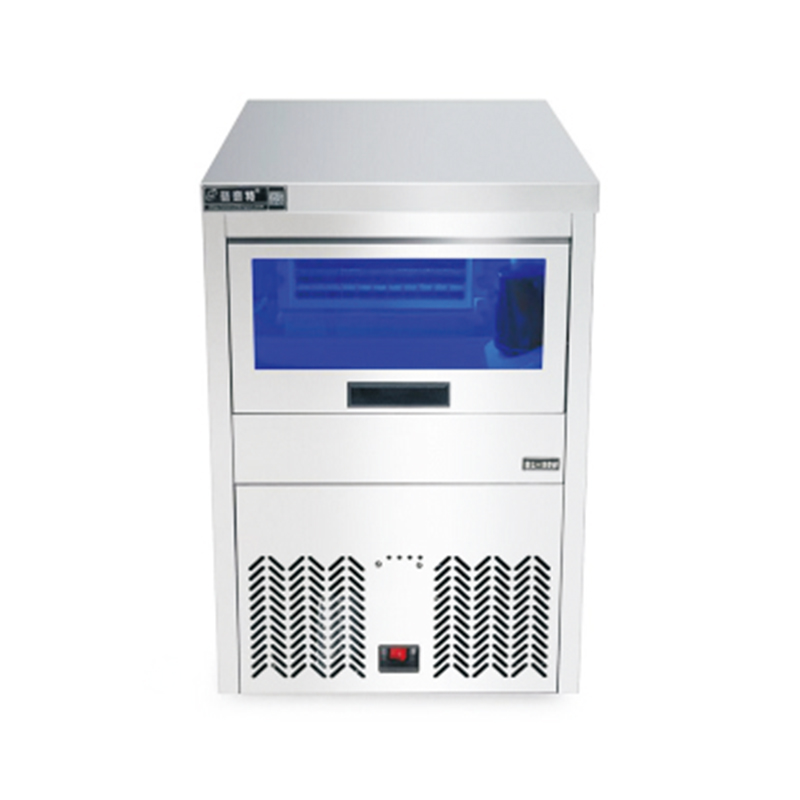 Square Cube Ice Maker for Cafes and BarsA quiet square-cube ice machine with LCD controls, one-button cleaning, and scalable capacities, including compact models for low-volume cabinet installations.View Product →
These settings rarely need high volume, but they do need quiet operation, simple cleaning, and a footprint that fits a standard cabinet. A modest undercounter unit with a sealed bin is usually a better fit than a large machine running at a fraction of its capacity.
None of this is complicated, but each point is easier to settle before delivery than after. If you are working out which built-in undercounter ice maker suits a specific counter, menu, or service pattern, tell us the dimensions and the busiest hour of your day — that is usually enough for us to point you to the right capacity and ice style rather than the largest machine on the list.

No.8 Xinhua Road, Dianshanhu Town, Kunshan City, Suzhou, Jiangsu Province, China
Call Us: +86-18217685733 / +86-18221531811
E-mail: [email protected] / [email protected]
Copyright © Jiangsu Bingluo Refrigeration Equipment Co., Ltd. All Rights Reserved. Commercial Refrigeration Equipment Solutions