 English
 русский
 Español
 عربى
عربىIndustry News
Home / News / Industry News / Apartment-Size Kitchen Refrigerator: A Practical Guide to Compact Fridges
2026-10-09
Walk into a studio apartment or a small cafe kitchen and you notice the same thing: every inch of floor space has a job. That is exactly the problem an apartment-size kitchen refrigerator is built to solve. These units fit where a full-size fridge would block a doorway, swallow the only prep surface, or simply never make it through the front door in the first place.
This guide covers what actually defines an apartment-size refrigerator, how to measure your space before you buy, which layouts suit which kitchens, and which features are worth paying for. Along the way we will share a few ideas we have picked up building refrigeration equipment for commercial kitchens, because tight spaces behave the same way whether they sit in a home or behind a service counter.
Content
Most household refrigerators are 30 to 36 inches wide. Apartment-size models generally land between 18 and 30 inches, with capacities from roughly 7 to 14 cubic feet. Depth matters just as much: a standard fridge can run 30 to 32 inches deep, while counter-depth designs stay around 24 to 25 inches so they sit close to flush with the cabinets.
Because the footprint is smaller, these refrigerators usually trade width for height. A narrow column unit can stand close to 70 inches tall and still hold a genuinely useful amount of food, simply by stacking shelves vertically instead of spreading them sideways. The result is an appliance that takes up less wall space than a bookcase but still handles a full grocery run.
One thing worth knowing up front: "apartment-size" describes a footprint, not a quality level. You will find basic manual-defrost boxes and fully featured frost-free models in the same width.
Almost every disappointing refrigerator purchase comes down to a measurement taken in a hurry. Before you compare models, grab a tape measure and check four things.
Write the numbers down before you shop. It turns a confusing showroom into a short list.
Apartment-size refrigerators come in a handful of layouts, and each one trades something different.
Usually 18 to 24 inches wide, these are all-fridge designs with no freezer compartment. They suit cooks who keep a separate freezer or who mostly chill drinks, produce, and leftovers.
Between 24 and 30 inches wide with a shallower body, these are the classic choice for galley kitchens where a protruding fridge would narrow the walkway.
The most affordable layout, with the freezer above and the fridge below. Simple, reliable, and easy to repair, though the freezer space is modest.
Under-counter models slide beneath a worktop and work well as a second fridge or a drinks cabinet. Slim French door models sit at the wider end of the range but offer the most usable capacity.
| Style | Typical width | Typical depth | Typical capacity | Best suited to |
|---|---|---|---|---|
| Column / all-refrigerator | 18-24 in | 24-25 in | 8-14 cu ft | Narrow gaps, no freezer needed |
| Counter-depth bottom-freezer | 24-30 in | 24-28 in | 10-14 cu ft | Galley kitchens and walkways |
| Top-freezer compact | 24-28 in | 26-28 in | 10-12 cu ft | Budget-conscious small kitchens |
| Under-counter compact | 20-24 in | 22-24 in | 4-6 cu ft | Second fridge or drinks storage |
| Slim French door | 28-30 in | 26-30 in | 12-15 cu ft | Maximum capacity in a slim body |
In a small kitchen, a feature either earns its space or it does not. These are the ones we would prioritize.
We build refrigeration for cafes, bars, bakeries, and tea shops, and the brief we hear most often sounds like an apartment problem: "It has to fit right here, and it still has to hold everything." Commercial kitchens have been solving that puzzle for decades, and a few of their habits translate well to homes.
The most useful one is vertical thinking. A tall, narrow cabinet on a 24-inch footprint can store more than a short, wide one, which is why upright refrigerators remain a staple in small food businesses. The second habit is choosing a material you can actually clean: stainless steel, inside and out, shrugs off spills and daily wiping better than most finishes.
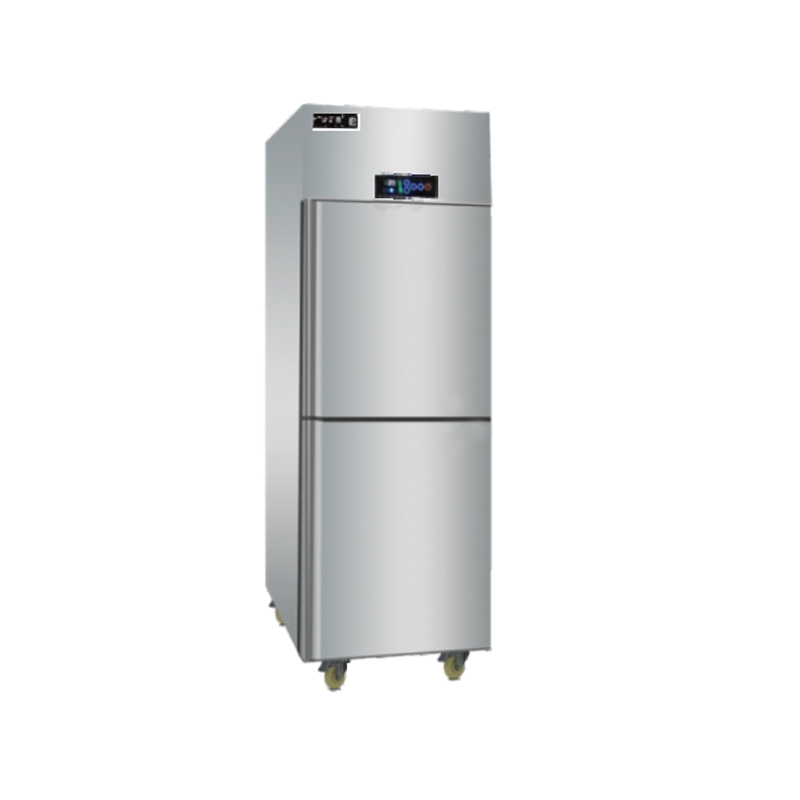 201/304 Stainless Steel Upright Commercial RefrigeratorUpright commercial refrigerator in 201/304 stainless steel with air cooling, digital temperature control, adjustable shelves and auto-return door.View Product →
Air cooling is another lesson worth borrowing. Circulating cold air evenly keeps the top shelf as cold as the bottom, which matters when a fridge is packed to the door. It is the same principle behind the refrigeration range we build at Bingluo Refrigeration. If you are weighing a home-style compact fridge against a light-commercial cabinet, it also helps to understand how residential and commercial refrigerators differ.
Not every tight kitchen needs a tall refrigerator. If you already have a counter run, a horizontal or under-counter unit slides beneath it and turns otherwise empty space into cold storage. You give up height, and therefore capacity, but you gain an uninterrupted work surface. In a galley layout that is often the better trade.
These are among the formats we build most often, in 201 and 304 stainless steel, with air-cooled or direct-cool options depending on how steady the temperature needs to be. Look for a front-breathing design if the unit will be tucked under a counter, and check that the door opens far enough to pull out the drawers inside.
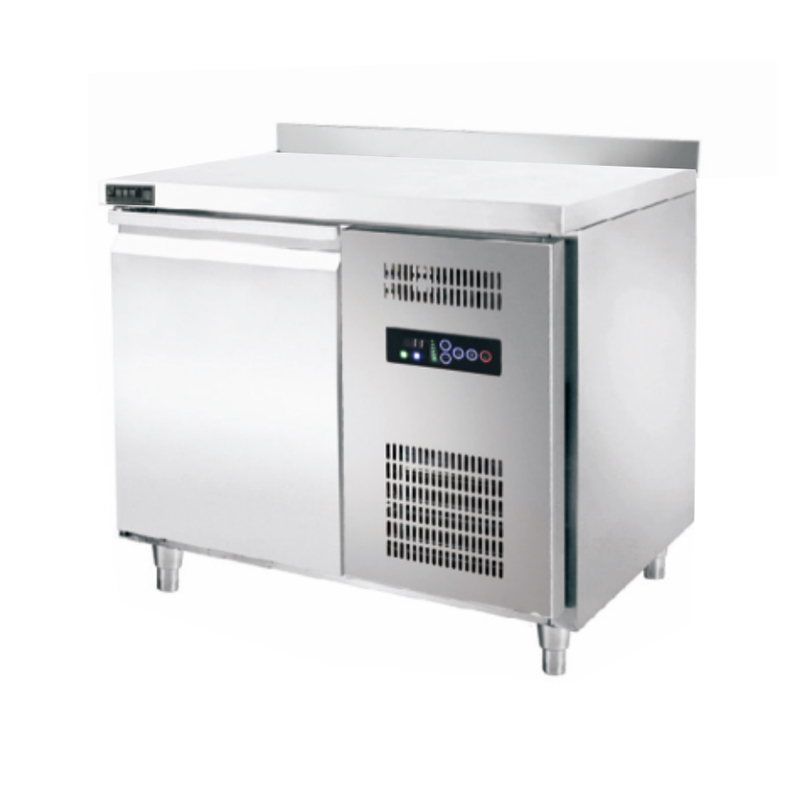 201/304 Stainless Steel Horizontal Commercial RefrigeratorHorizontal commercial refrigerator for meat, seafood, dairy, vegetables and beverages, featuring stainless steel construction, digital controls and an auto-return door.View Product →
In the smallest kitchens, the real shortage is not cold storage, it is surface area. That is why prep-table refrigerators exist: a stainless worktop on top, a refrigerated compartment with food pans below. You chop on it, you store in it, and you cross an appliance off the floor plan entirely.
Home cooks usually meet this idea through a small island or a butcher block set over a compact fridge. In commercial settings, the same concept is built as a salad or pizza prep table, with drawers and pans sized for ingredients rather than packaging. Either way the logic holds: in a small kitchen, the best appliance is often the one doing two jobs at once.
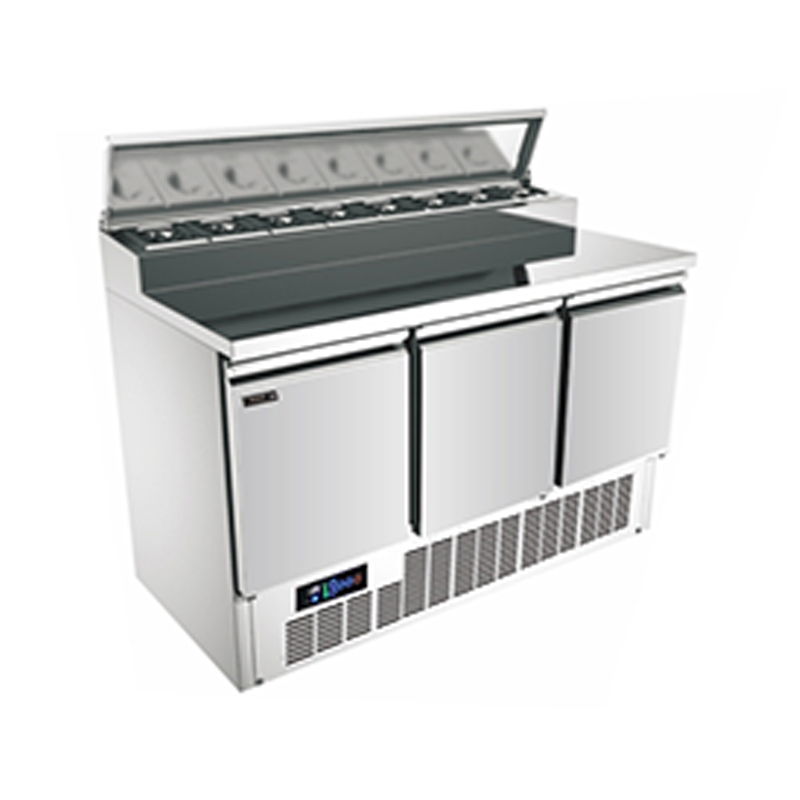 304 Stainless Steel Salad and Pizza Prep RefrigeratorCommercial prep refrigerator in 304 stainless steel with customizable drawers, nylon boards and rear-mounted evaporator for salad and pizza ingredient storage.View Product →
A compact refrigerator works hard in a small room, so a few simple habits go a long way.
Most fall between 18 and 30 inches. Column and under-counter models sit at the narrow end, while slim French door models sit at the wider end.
Most interior doorways are 30 to 32 inches wide, so a 24-inch refrigerator passes comfortably once the doors and handles are removed. Measure the narrowest point along the whole route, not just the doorway itself.
Yes, provided the freezer section is a real freezer compartment rather than a chiller box. Check the freezer volume separately, and look for a model with its own freezer thermostat.
An apartment-size kitchen refrigerator is really a compromise you design on purpose: less width, more height, and a footprint that respects the room around it. Measure twice, decide what the space genuinely needs to do, and the right unit usually becomes obvious.

No.8 Xinhua Road, Dianshanhu Town, Kunshan City, Suzhou, Jiangsu Province, China
Call Us: +86-18217685733 / +86-18221531811
E-mail: [email protected] / [email protected]
Copyright © Jiangsu Bingluo Refrigeration Equipment Co., Ltd. All Rights Reserved. Commercial Refrigeration Equipment Solutions