 English
 русский
 Español
 عربى
عربىIndustry News
Home / News / Industry News / Air Cooled Commercial Ice Maker Buying Guide: What Every Business Owner Should Know
2026-07-31
Content
An air cooled commercial ice maker is a machine that uses ambient air, pulled in by an internal fan, to dissipate heat from the refrigeration system as it produces ice. This is different from a water cooled ice machine, which uses a constant flow of water to cool the condenser instead of air. Because air cooled commercial ice makers don't require a dedicated water line for cooling, they are generally easier to install, cost less to operate, and are the go-to choice for the vast majority of restaurants, bars, hotels, and convenience stores. The machine works by drawing in water, freezing it into ice using a refrigerant-cooled evaporator plate or cylinder, and then releasing the ice into a storage bin once it reaches the correct size and thickness.
Understanding how an air cooled ice maker functions helps business owners make smarter purchasing and placement decisions, especially since these machines are sensitive to the temperature and airflow of the room they're installed in.
One of the first decisions a business needs to make is whether an air cooled or water cooled system fits their operation better. While water cooled machines can run slightly quieter and perform well in very hot environments, air cooled commercial ice makers are usually the more practical and cost-effective choice for most businesses.
| Factor | Air Cooled | Water Cooled |
| Installation Complexity | Simple, no extra water line needed | Requires additional water supply and drain |
| Operating Cost | Lower, no continuous water usage | Higher due to constant water consumption |
| Performance in Hot Rooms | Can be affected by high ambient heat | More stable in high-heat environments |
| Local Regulations | Generally unrestricted | Restricted or banned in some water-scarce regions |
Selecting the right air cooled commercial ice maker involves more than just picking a model with the biggest daily ice production number. Several practical factors should guide the decision.
Ice makers are rated by how many pounds of ice they can produce in a 24-hour period. A busy bar or restaurant during peak season may need significantly more capacity than the average daily estimate suggests, so it's wise to size up rather than cut it close.
Different businesses benefit from different ice shapes. Full cube ice is common in bars for cocktails, half cube or nugget ice is popular in fast casual restaurants and healthcare settings, and flake ice is often used for food displays and seafood presentation.
Since air cooled ice makers rely on airflow to dissipate heat, they need adequate clearance around the unit and should not be installed in cramped, poorly ventilated spaces where hot exhaust air can recirculate back into the machine, reducing efficiency and ice production.
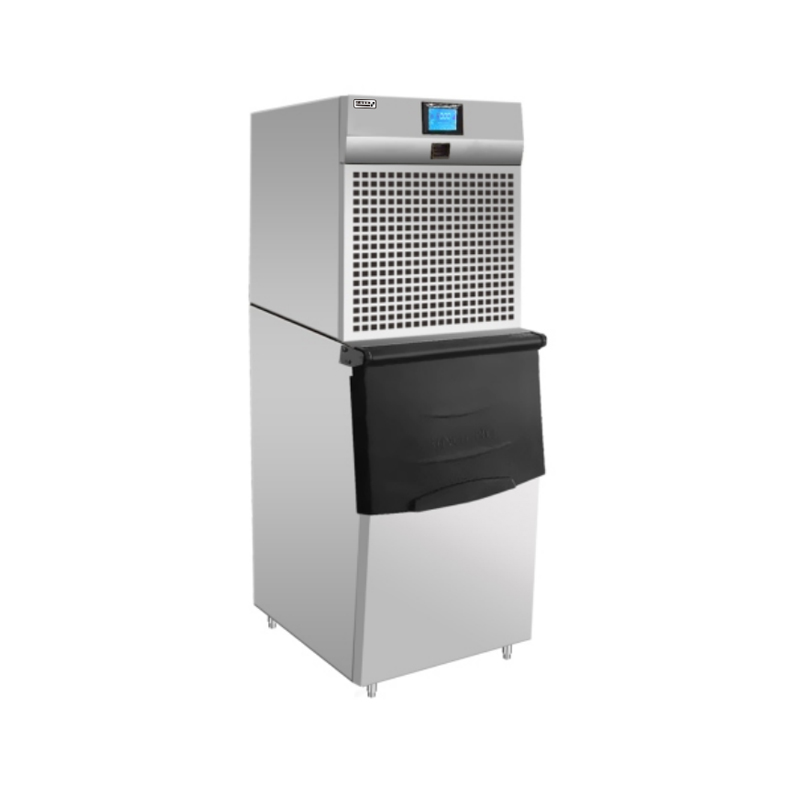
Air cooled commercial ice makers come in a few standard configurations depending on how the business plans to use and store the ice.
Regular maintenance is essential for keeping an air cooled commercial ice maker producing clean, consistent ice while avoiding costly breakdowns during peak business hours.
Air cooled commercial ice makers are a staple across many different business types, each with slightly different priorities when it comes to ice production. Restaurants and bars typically prioritize full cube or nugget ice for beverages, while healthcare facilities often favor nugget ice due to its softer texture, which is easier and safer for patients to chew. Hotels commonly install undercounter or modular units in guest areas for convenience, while grocery stores and seafood markets rely on flake ice machines to keep perishable products fresh during display. Understanding the specific ice needs of your business helps narrow down not just the machine size, but the exact configuration and ice type that will serve customers best.
An air cooled commercial ice maker remains one of the most practical and cost-efficient choices for businesses that need reliable ice production without the added complexity of a water cooling system. By carefully considering daily capacity needs, available space, ice type, and ongoing maintenance requirements, business owners can select a machine that keeps up with demand while minimizing operating costs and downtime. Taking the time to properly size and maintain an air cooled ice maker pays off in smoother daily operations and fewer unexpected service calls down the road.

No.8 Xinhua Road, Dianshanhu Town, Kunshan City, Suzhou, Jiangsu Province, China
Call Us: +86-18217685733 / +86-18221531811
E-mail: [email protected] / [email protected]
Copyright © Jiangsu Bingluo Refrigeration Equipment Co., Ltd. All Rights Reserved. Commercial Refrigeration Equipment Solutions